Discover the Real Berner Oberland on the Charming Simmentaler Hausweg
Take a trip with us this week to the Berner Oberland's lovely lower Simmental. Way less touristy than nearby valleys, the Simmental offers stunning scenery, excellent history, and a traditional and relaxed pace. If you are looking for a way to escape the crowds of the Berner Oberland, look no further.
DISCOVERING BERN
Weissenburg to Erlenbach
For almost a year we have been exploring the in’s and out’s of Switzerland’s Berner Oberland, dancing around from valley to valley doing walks and exploring. At this point, we have actually seen quite a bit of the region but, until a few weeks ago, we still had our white whale. The one impressive and legendary valley that we were completely missing. The Simmental.
That’s not for any logistical difficulties, the Simmental is better connected than most valleys with a regular train but, with so much to see, we really just never made it… All I can say is, after visiting for the first time, we are certain to be back. The Simmental is gorgeous and boasts more cool hikes than you can shake a stick at. The best part, it’s close to home and not nearly as touristy as other parts of the Berner Oberland.
This week we break the ice of the Simmental with a gentle walk along the Simmentaler Hausweg, paths and roads connecting some of the valley’s most impressive houses with the added benefit of world class village churches and lovely mountain views. While the path serves as a nice walk, I think it would also make for a lovely bike ride. The gentle rolling topography would make for the perfect day and let you go a lot further.
Without further ado, we are off to the Simmental. Thanks for joining!
You can follow along with our walk using the interactive map above
To the Seat of the Barons of Weissenburg
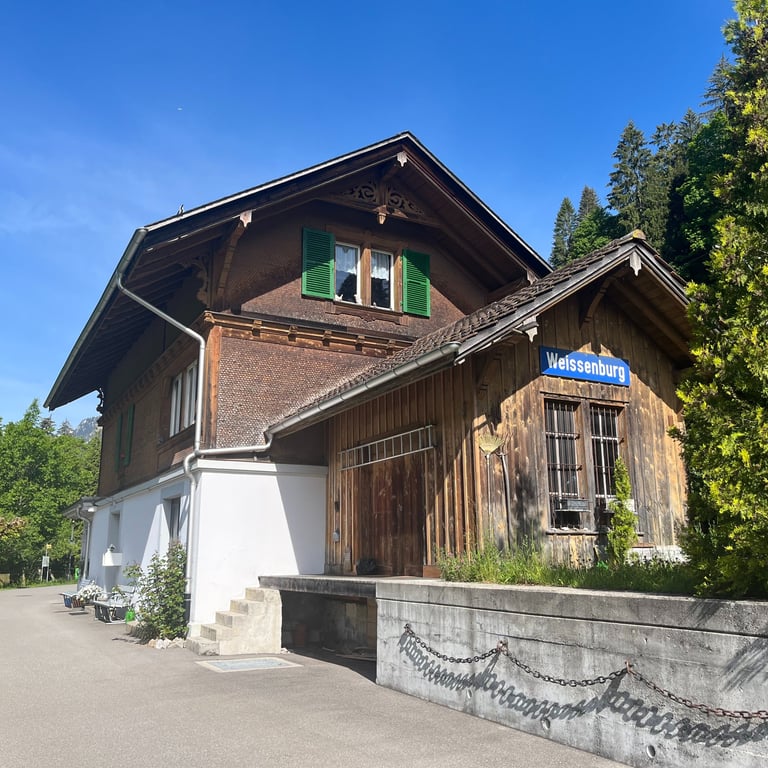
The Train Station and Mineral Springs at Weissenburg
With not much of a reason to linger by the train station other than a quick peak into the old spring house, we head for the switch backs down into the small village near the banks of the Simme River in the valley below.
First mentioned in the 13th Century, the grand Weissenburg Castle, house of the Barons of Weissenburg, the noble family who controlled much of the upper Simmental, once towered over the small village. Today, the castle sits in ruins in a rather inaccessible spot on the hill adjacent to the village and we pass the opportunity to explore it, in part because there are more interesting sites to see downhill, but also because the origins of the Barons of Weissenburg is relatively complicated and obscure.
A lot more is known about the family's downfall. At their peak in the early 14th Century, the Barons controlled lands from the Lower Simmental to Unterseen and Unspunnen near Interlaken, a fairly sizeable domain. As strong supporters of the Habsburgs, the Weissenburgers drew the chagrin of the Bernese who ended up besieging Wimmis as many as nine times! This endless conflict sent the Barons into spiraling debt which inevitably forced them to become citizens of Bern. This effectively deeded their lands to the Bernese. The death of the childless Johann II, the last of the Weissenburgers, brought the family name to an end in 1368.
The Talweg, or valley route, of the Simmentaler Haus Weg extends a full 18 km from Wimmis near Spiez at the mouth of the Simmental to Weissenburg west of Darstetten. Our shorter walk generally follows that path in reverse from Weissenburg to Erlenbach im Simmental, allowing us to gain elevation with the train and lose it on foot along a relatively gentle c. 9 km (5.5 mile) route.
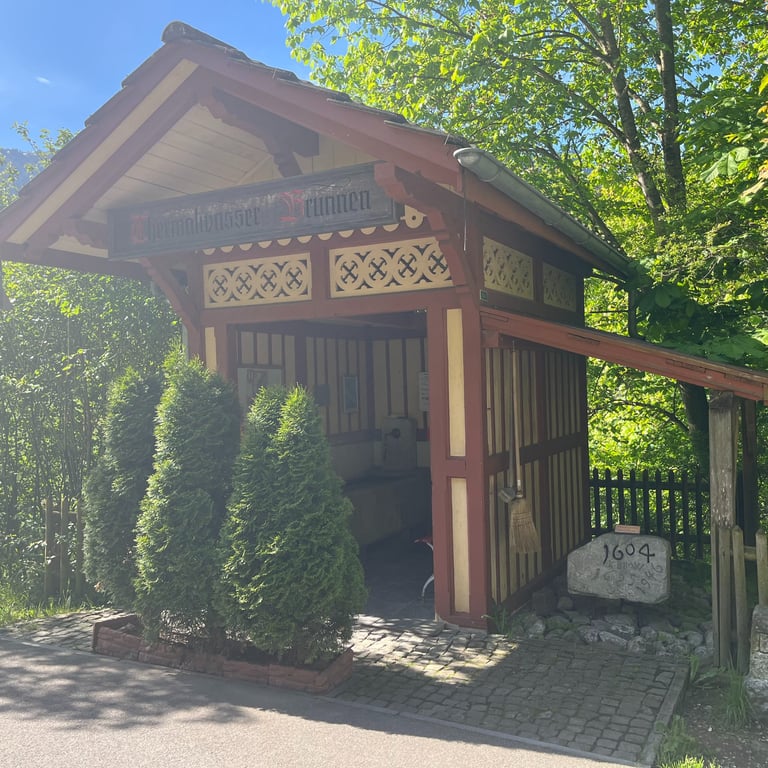
Today (and probably always) stepping off the train at Weissenburg is like transporting yourself back in time. The one platform train station is tiny and traditional with nothing more than a small building and a mineral water fountain extoling the benefits of the healing waters coming from the thermal springs up valley from here. That site is nothing more than the ruin of a Victorian era bath house today but it was once one of the region’s biggest draws and I am sure we will make a visit there at some point.
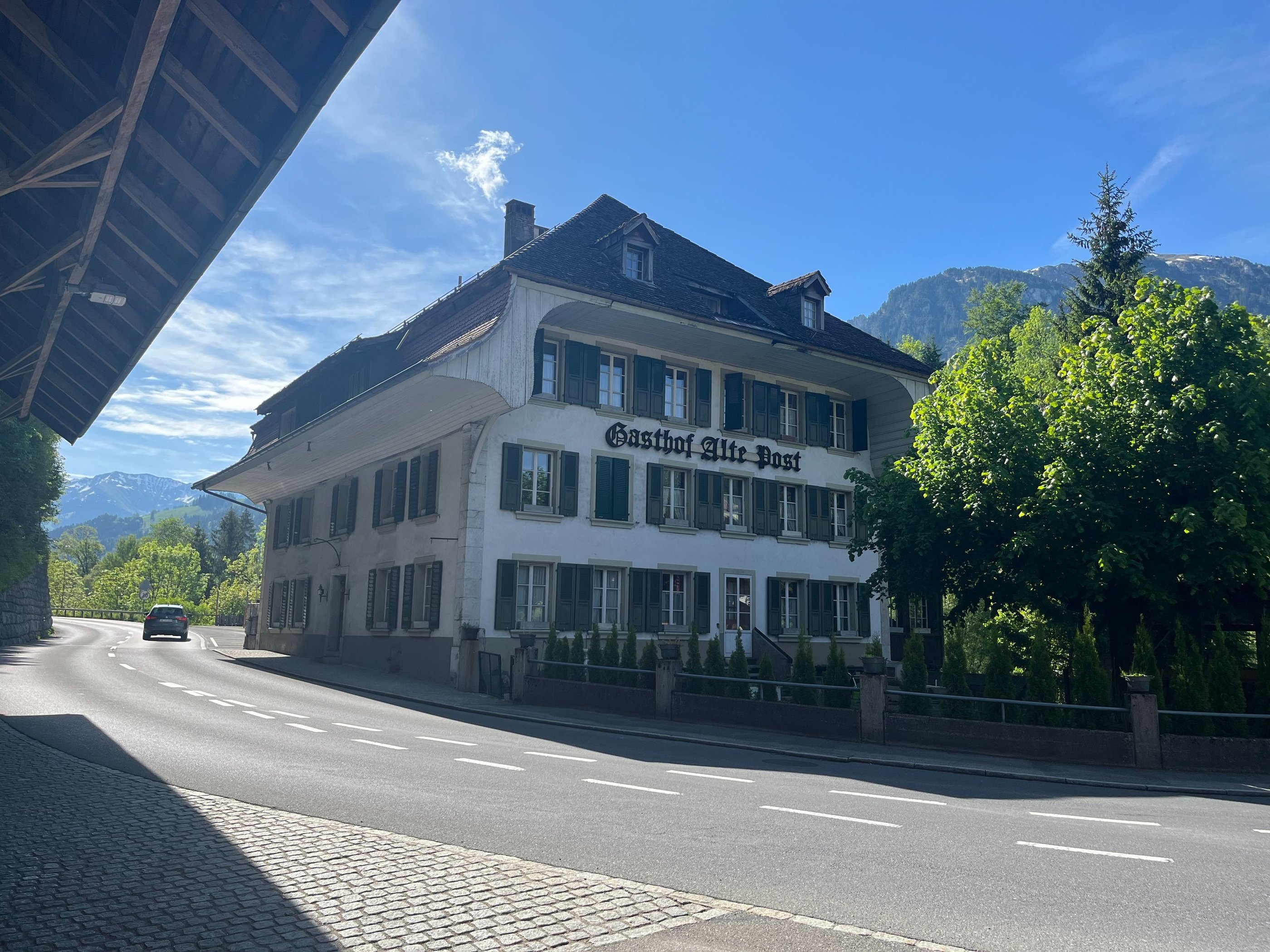
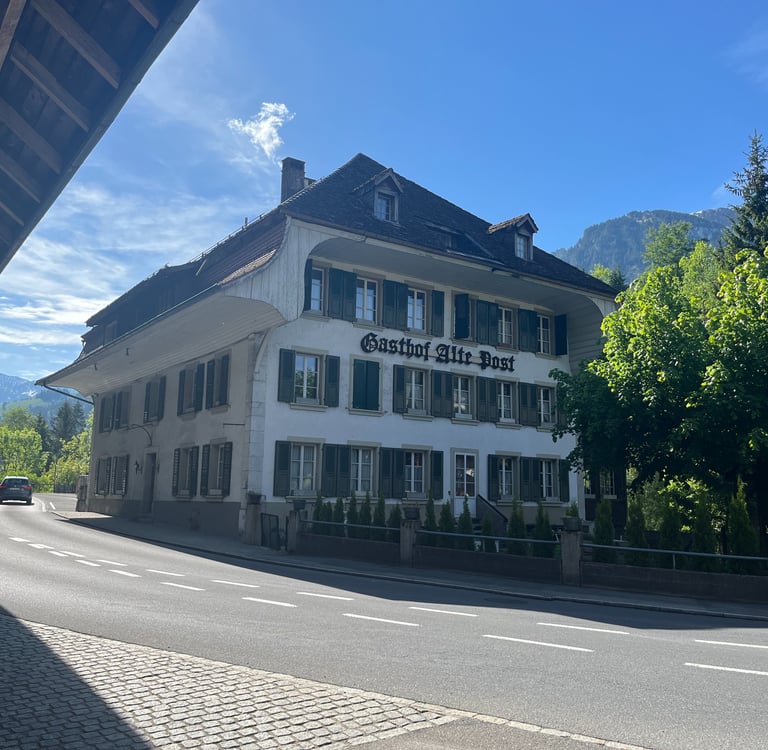
Gasthof Alte Post built in Weissenburg during the 18th Century
Through the Fields to Därstetten
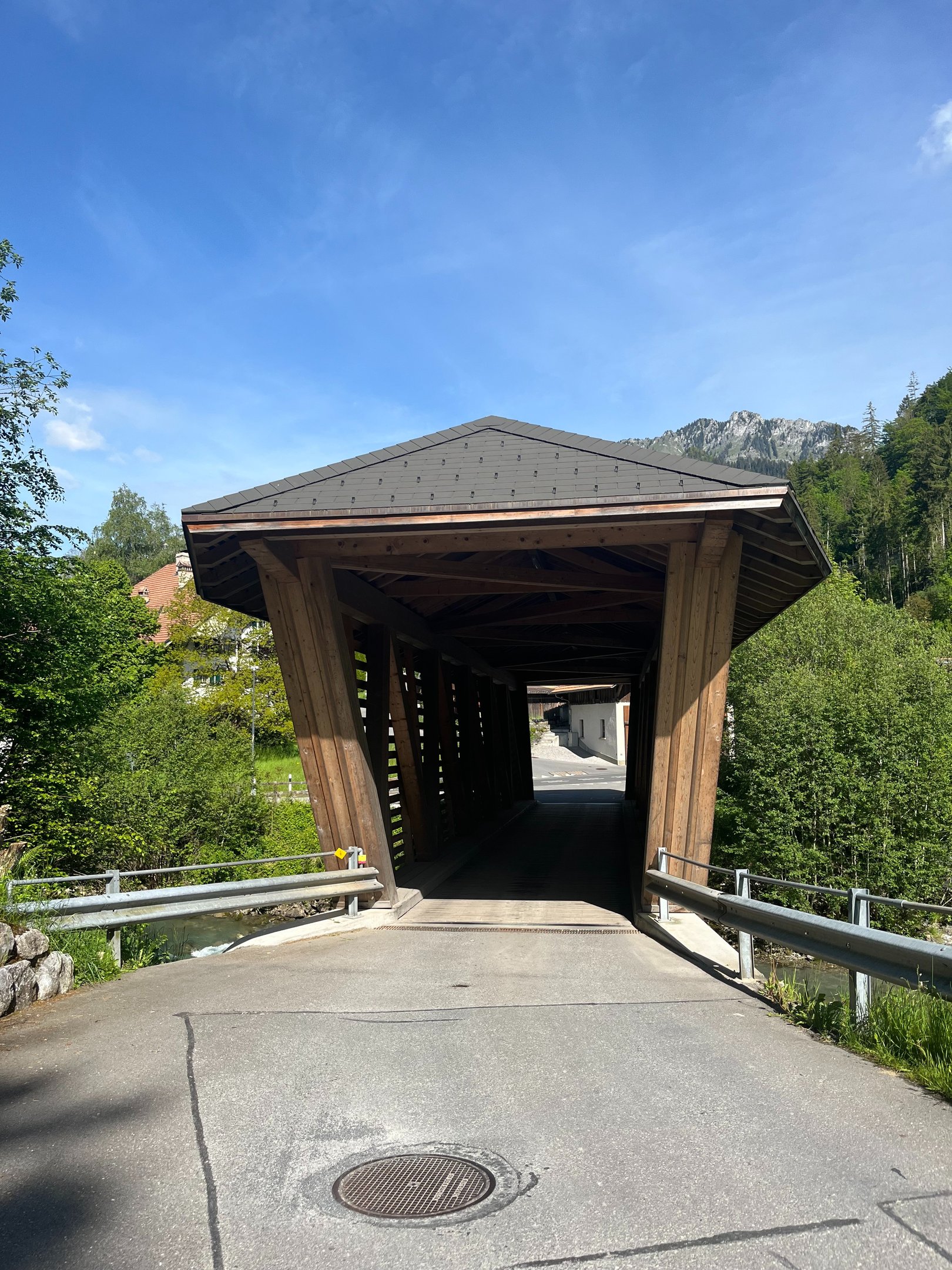
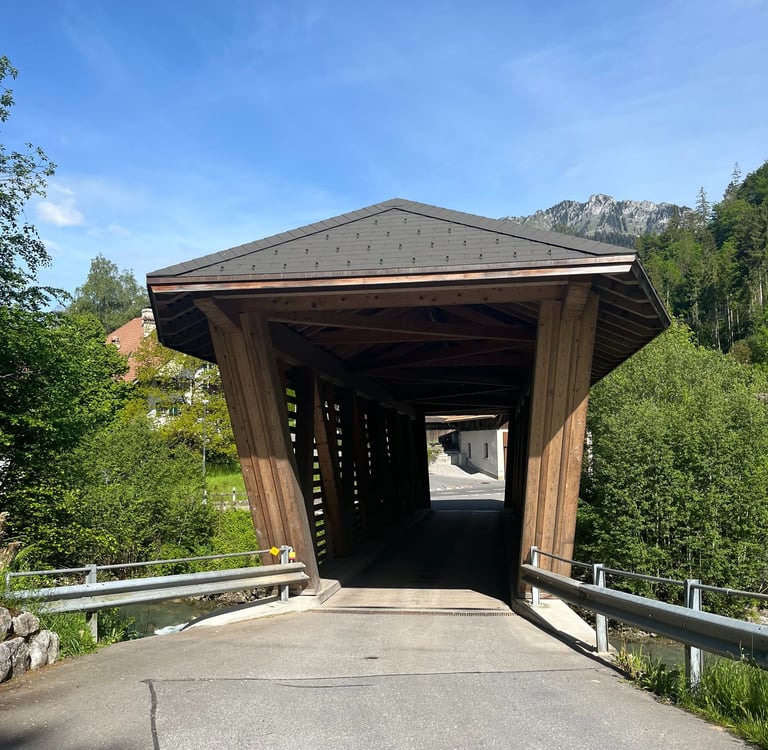
Several lovely historic buildings can be found at the bottom of the hill in Weissenburg before crossing over the river. Among these, is the fantastic Gasthof Alte Post dating to the 17th Century. Crossing a unique geometrically pleasing and modern take on a wooden covered bridge brings us to the other side of the Simme where we begin our walk in earnest.
The pleasingly modern covered bridge crossing the Simme in Weissenburg
From the covered bridge it's more or less a straight shot down the valley along rolling country roads through meadows to, quite possibly, the most spectacularly decorated chalet in all of Switzerland, the Knuttihaus house.
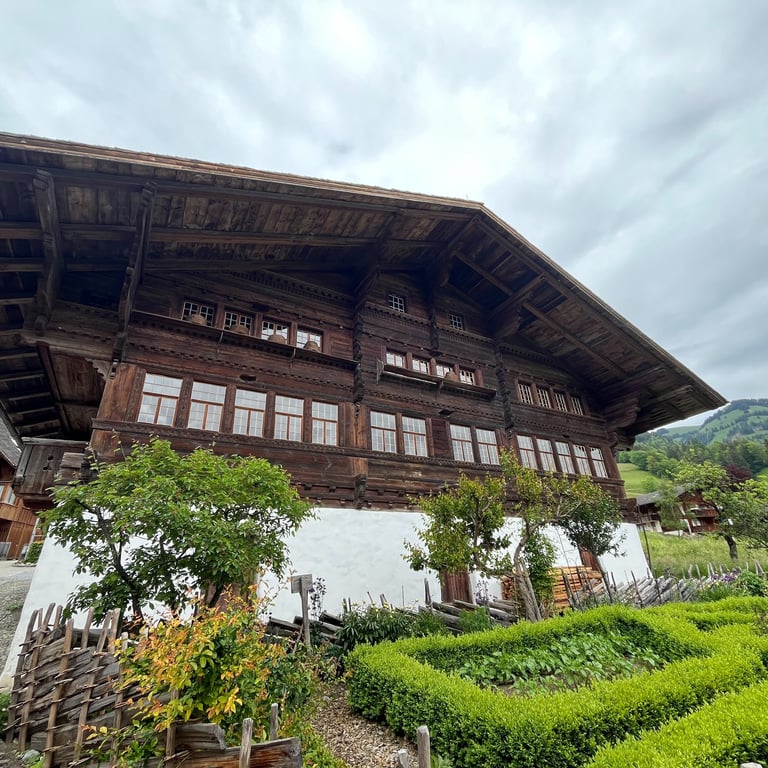
Built in 1756 as the home of the Knutti family, the painted exterior has been meticulously cared for and offers an incredible example of 18th-century craftsmanship.
Beyond the Knuttihaus, we passed several farmers out with their scythes cutting the grass the same way it has been cut in this valley for centuries. Of course, most of this laborious hand work has been replaced by machines, but on steep slopes and in small patches, the traditional tools still find their place.
Our latest visit was the first nice day in mid-June. Every year around the same time there is furious grass cutting all across Switzerland. I always know exactly when it happens because my allergies are sent into immediate overdrive. But why all the coordinated cutting? While Switzerland has its fair share of weird unwritten rules, this cacophony of mowers is, surprisingly, not one of them. While you are pretty much free to mow the grass when you please in Switzerland and doing so earlier than June actually gives you substantially higher overall grass yields for your animals, waiting to cut until mid-June has an advantage: Leaving the grass to grow longer promotes a greater diversity of wildflowers which, in turn, supports pollinators.
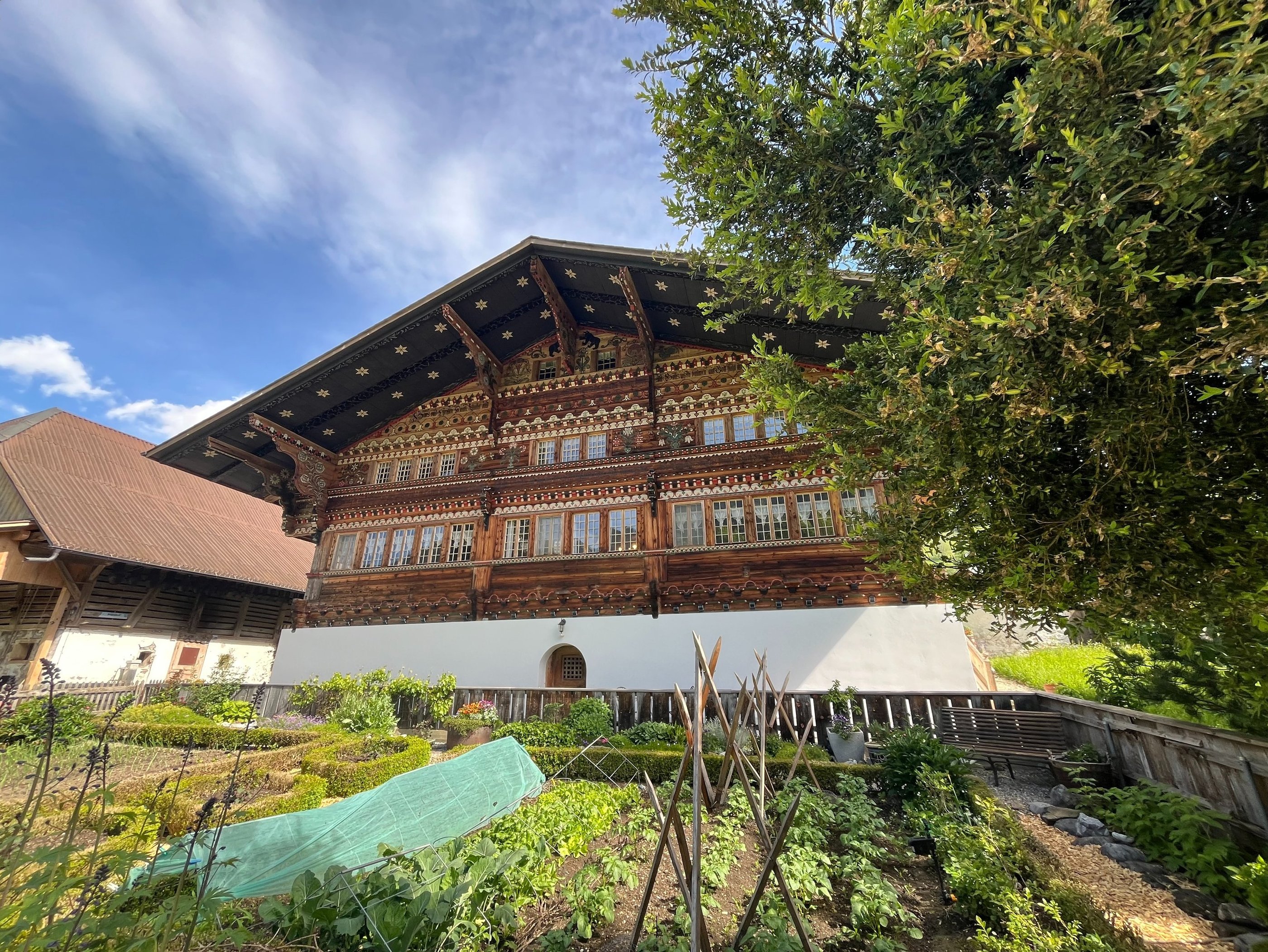
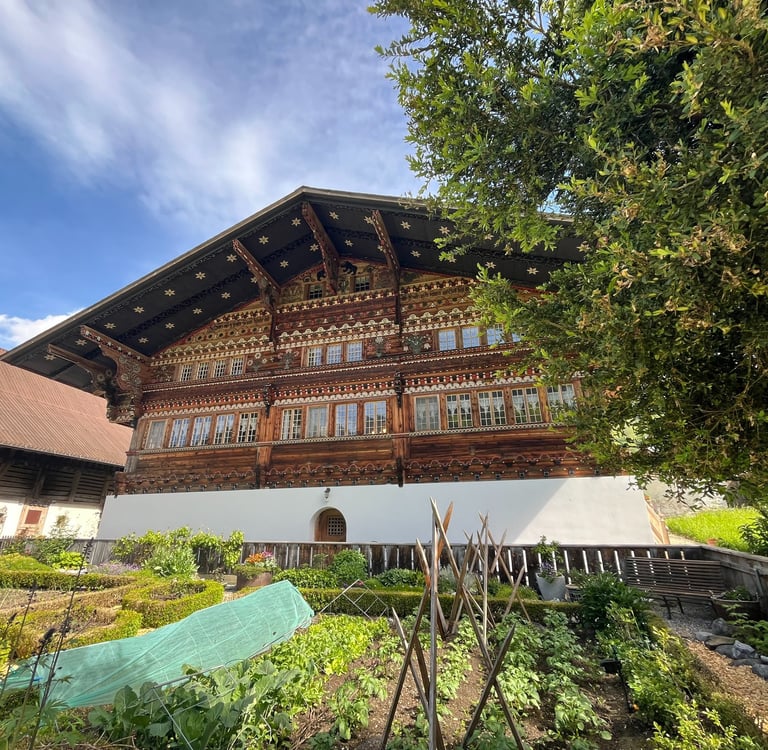
The fantastically painted and well maintained Knuttihaus outside of Därstetten
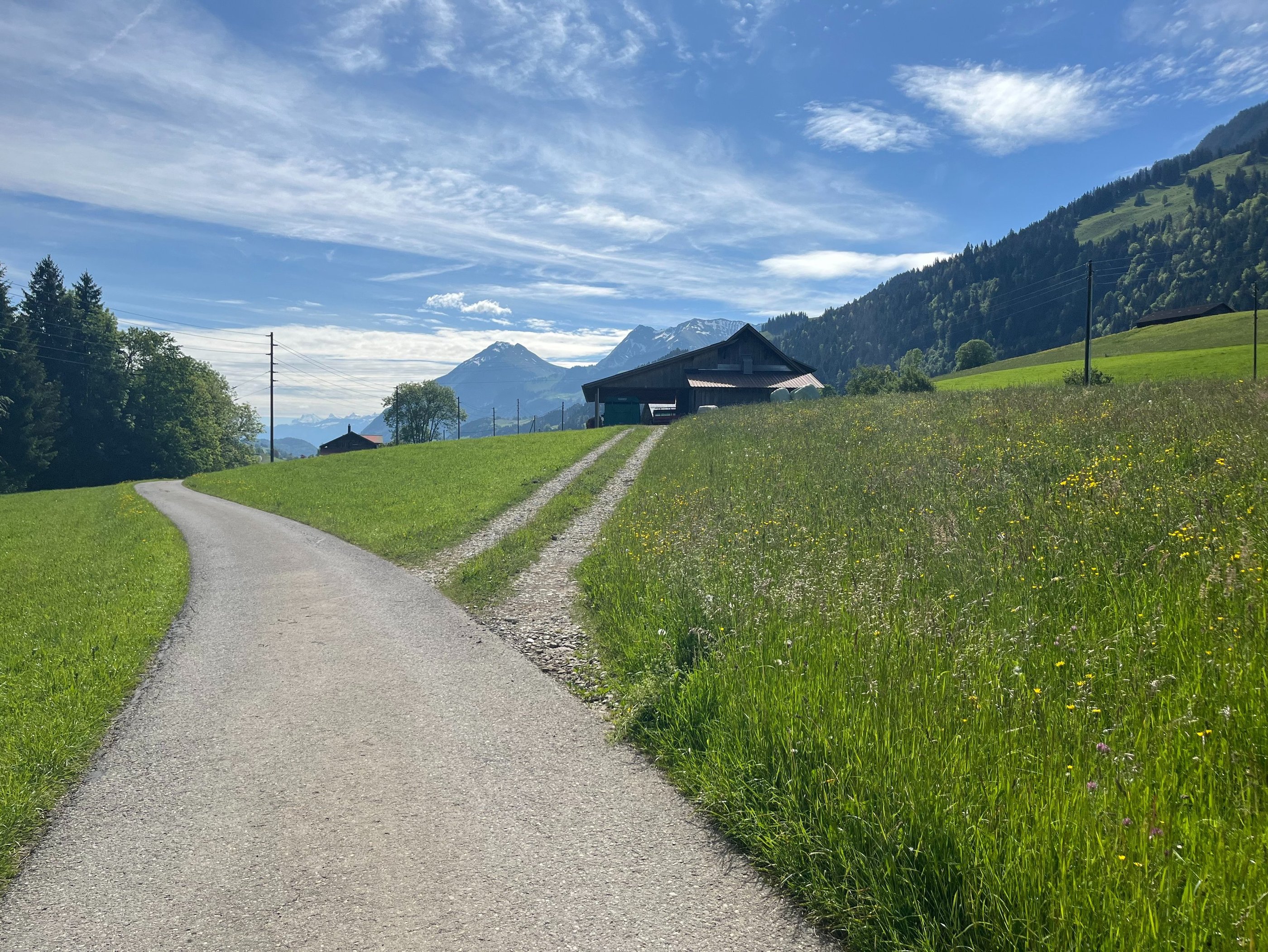
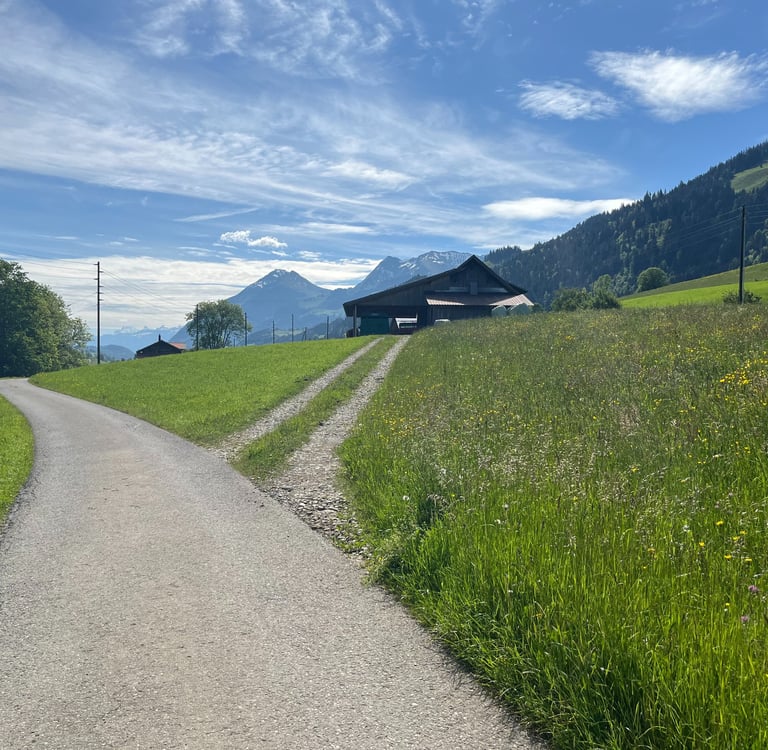
The combination of trimmed and un-trimmed grass with wildflowers in the Simmental
Before you get to thinking that the Swiss are that environmentally conscious, know that the government also subsidizes longer grass growth in the spring and early summer in the name of biodiversity. As soon as the subsidy period lapses, the Swiss get to work on promoting my hay fever.
The Church at Därstetten
Passing through the fields outside of Därstetten you start to seriously question why more people never find their way into the Simmental. The landscape is stunning, the mountain views are lovely, and the easy walking on the rolling path feels like something out of a dream.
Eventually you pass the 12th century Romanesque Kirche Därstetten. In the time of the Barons of Weissenburg, this was the center of a small but thriving monastery. Today the small church stands testament to days gone by. The monastery was abolished in the 15th Century and, ever since, the church has served the local community across the river.
As you may of gathered by this point, when Corinne and I travel around Switzerland, we make a habit of popping into the local church or chapel. Neither of us are particularly religious but churches tend to be some of the oldest buildings around and occasionally you find some gems hidden in plain sight. The museum in the clock tower of the Thun Stadt Kirche and the church built within a Roman fort across the river from Stein am Rhein immediately come to mind.
All the churches we have been to in the Simmental, including the Church at Därstetten, punch way above their weight. Throughout the Simmental, conservationists have peeled back centuries of whitewash dating back to the Reformation to reveal some of the most stunning frescos in all of Switzerland.
After snooping about the church and its grounds a bit we head back out on the path and continue along the banks of the Simme towards Ringoldingen.
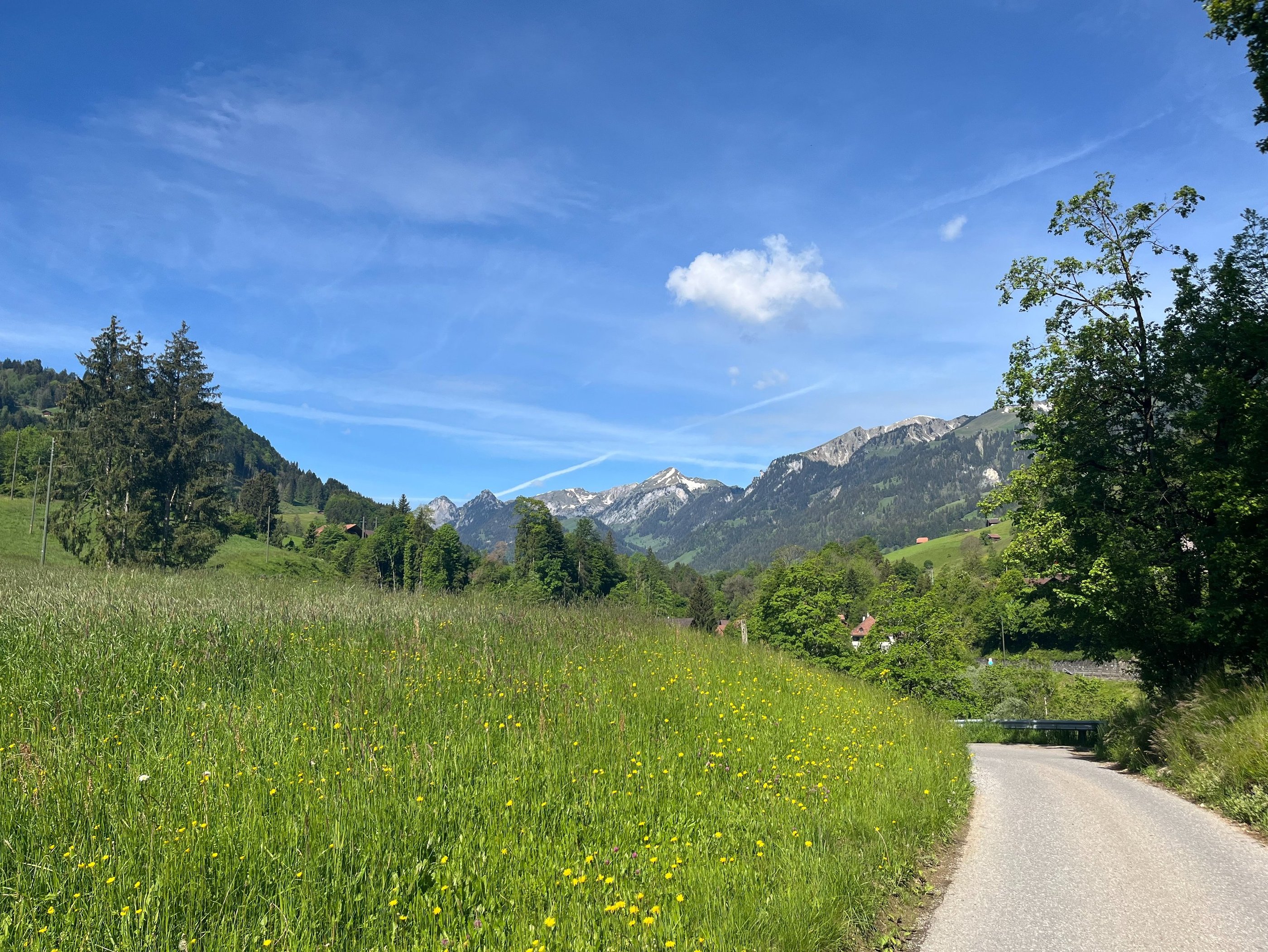
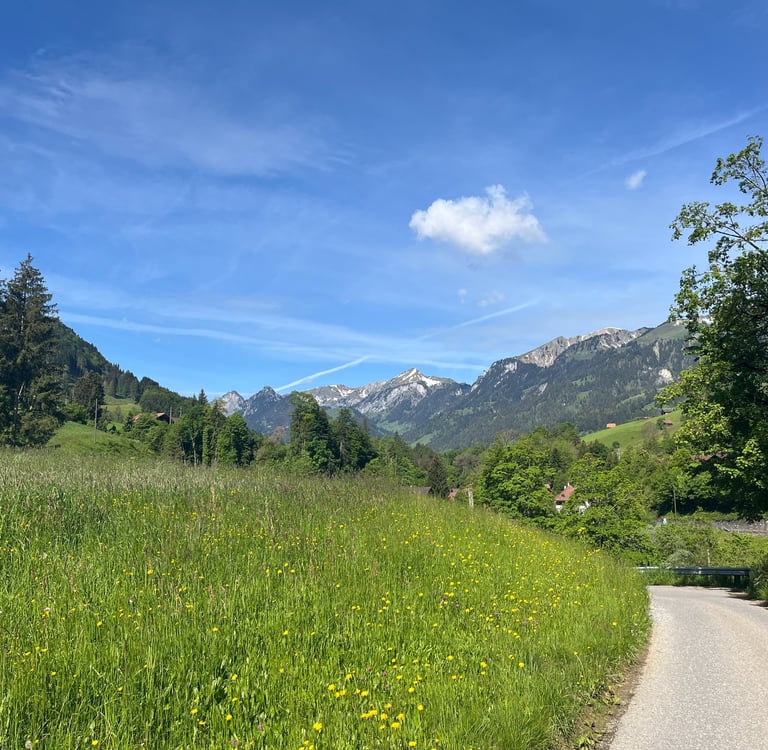
Fields of wildflowers outside Därstetten
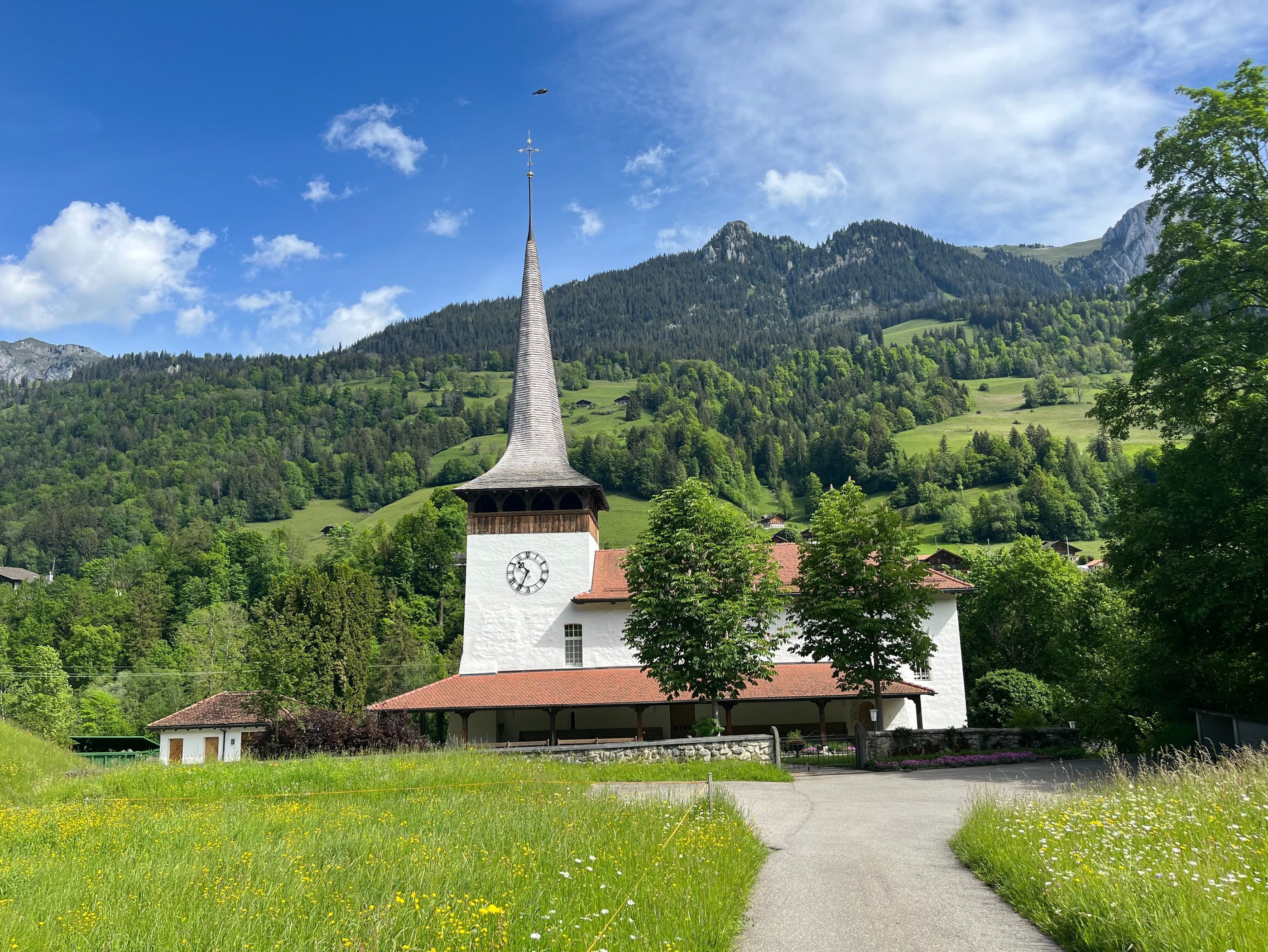
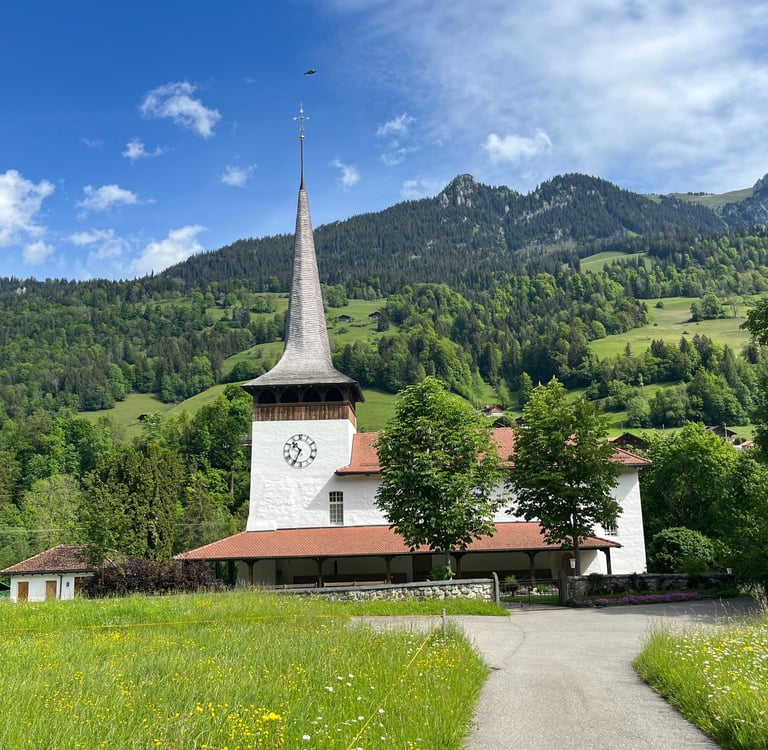
The old Kloster Church in Därstetten
Going Off-Road
While the signs for the Hausweg point you across a bridge over the Simme at Wiler, and (theoretically) continue up onto the hill a way towards a few more historic houses, we had a hard time finding the route and a safe way to cross the busy highway. We ended up back tracking from Wiler to the quiet dirt track on the other side of the river. This is probably not an option if you are on a bike but if you are walking, we can recommend it.
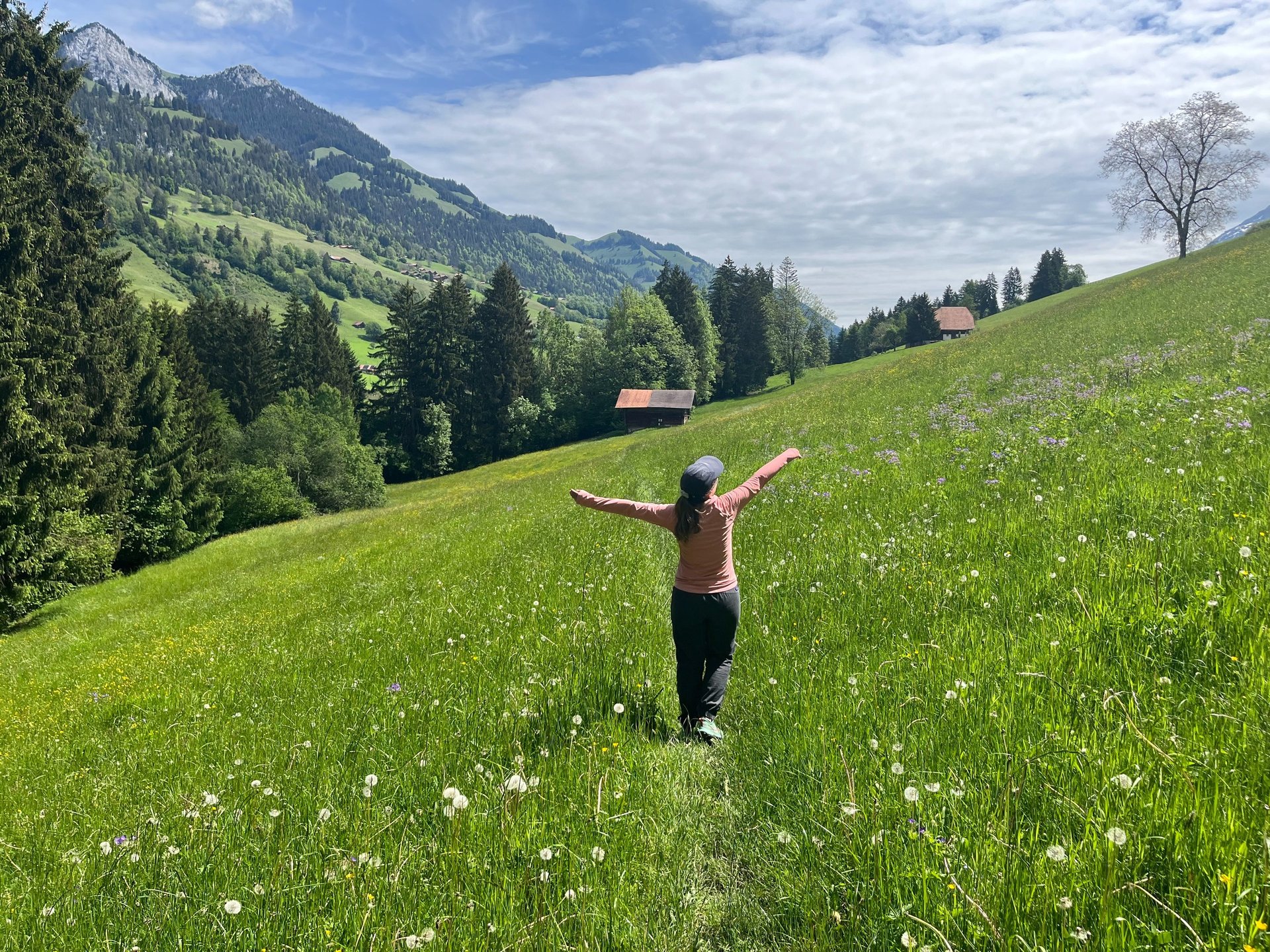
The river makes a few curves here and bumps up against the side of the valley meaning you have to gain a bit of elevation to get around but otherwise, the track is nice and contours through pastures and forest before dropping back down to the river level at Ringoldingen. The scenery is just plain pretty here. We even had a chance to recreate the Alpine scene from the Sound of Music. That is until Corinne nearly broke her ankle falling into a hole in the tall grass of the meadow…
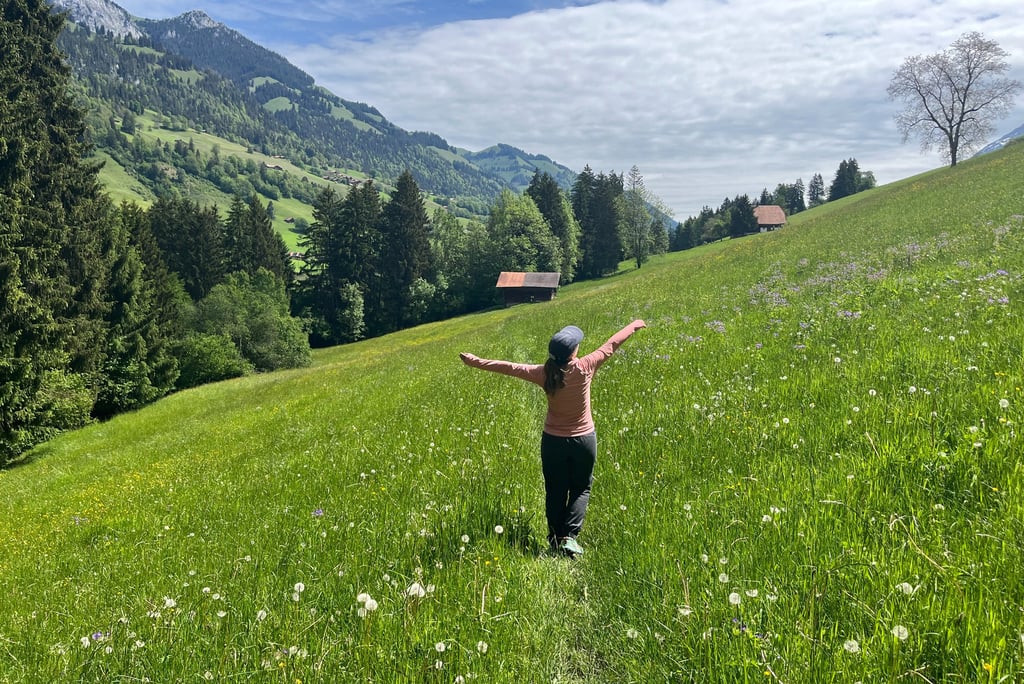
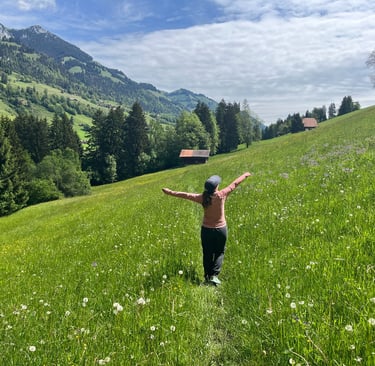
Lovely meadow in the Lower Simmental between Wiler and Ringoldingen
From Ringoldingen, you follow the Hausweg along the edge of the river before eventually crossing to the other side along a bridge just outside of Erlenbach. The scenery is idyllic here and a few benches along the way make for a nice picnic spot.
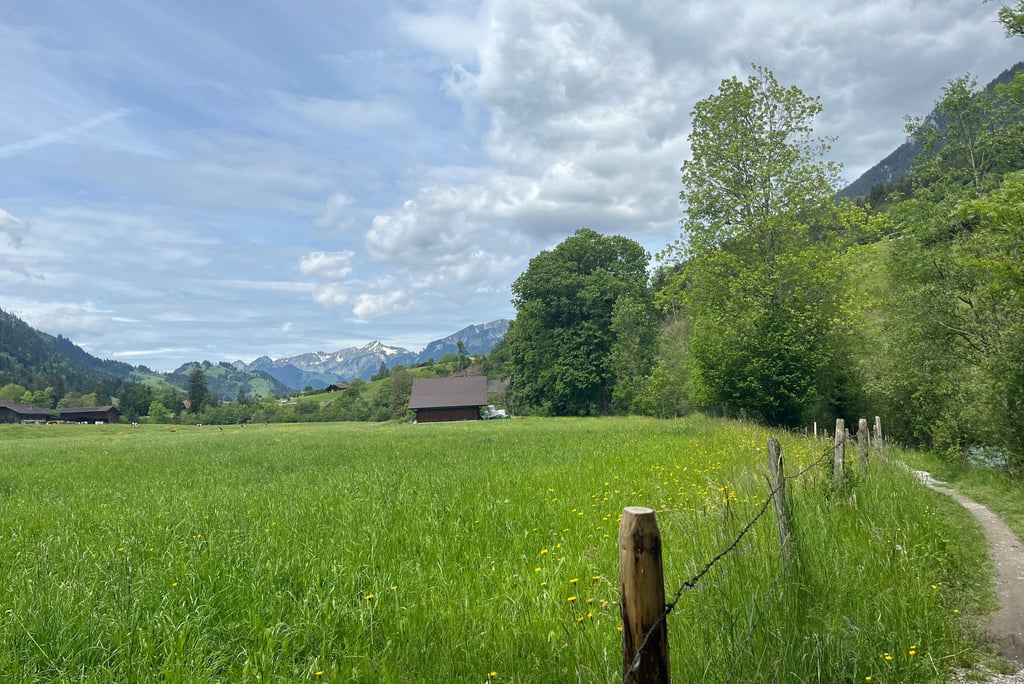
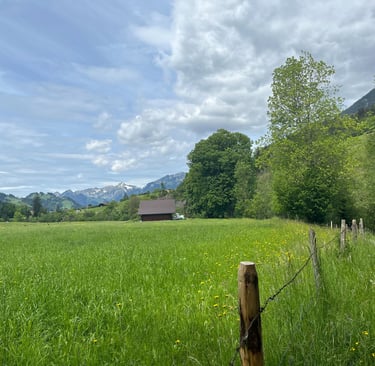
Views along the path from Ringoldingen to Erlenbach im Simmental
Exploring Erlenbach and Sankt Michaelskirche
Before absconding to the train station to complete your walk, continuing along the Hausweg down valley, or making your way further up into the mountains, be sure to walk up the hill and explore Erlenbach im Simmental. The town is bathed in history with evidence of human occupation extending as far back as the Paleolithic(!) and, because of its prominent position near the confluence of two valleys, the Simmental and Diemtigtal, it was the economic center of the region through the Middle Ages.
Of course, today, most visitors to Erlenbach will pass right by the town on their way from the train to the popular gondola station on the edge of town which whisks them up to the peak of Stockhorn in about 20 minutes, but it's worth carving out a bit of time for exploration down in the valley below.
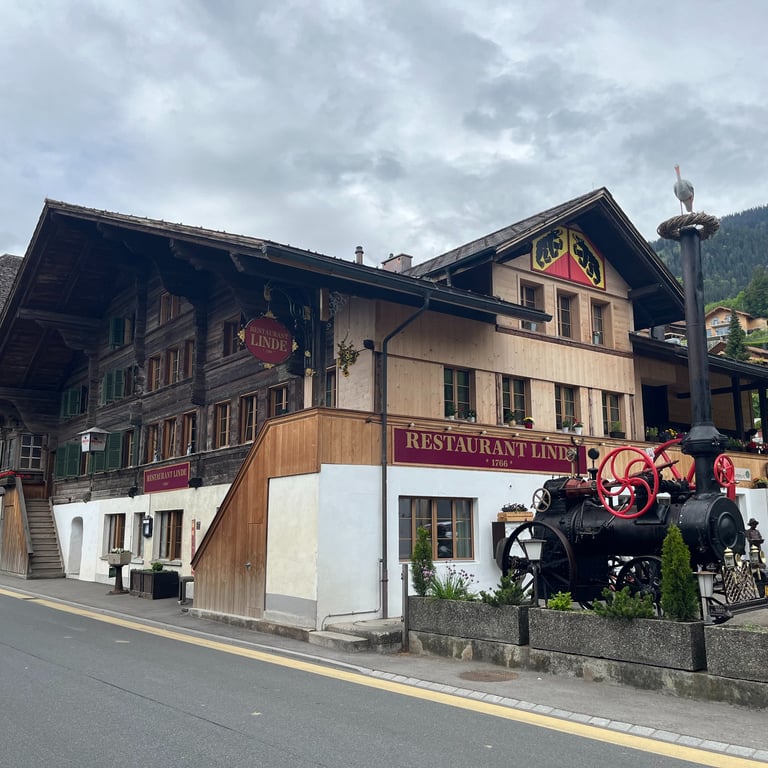
Erlenbach is a fairly quiet affair with some grand chalets built by master craftsman, a lively and traditional eatery called Restaurant Linde with a quirky old steam train out front, and quite possibly one of my favorite churches in all of Switzerland, Sankt Michaelskirche von Erlenbach im Simmental.
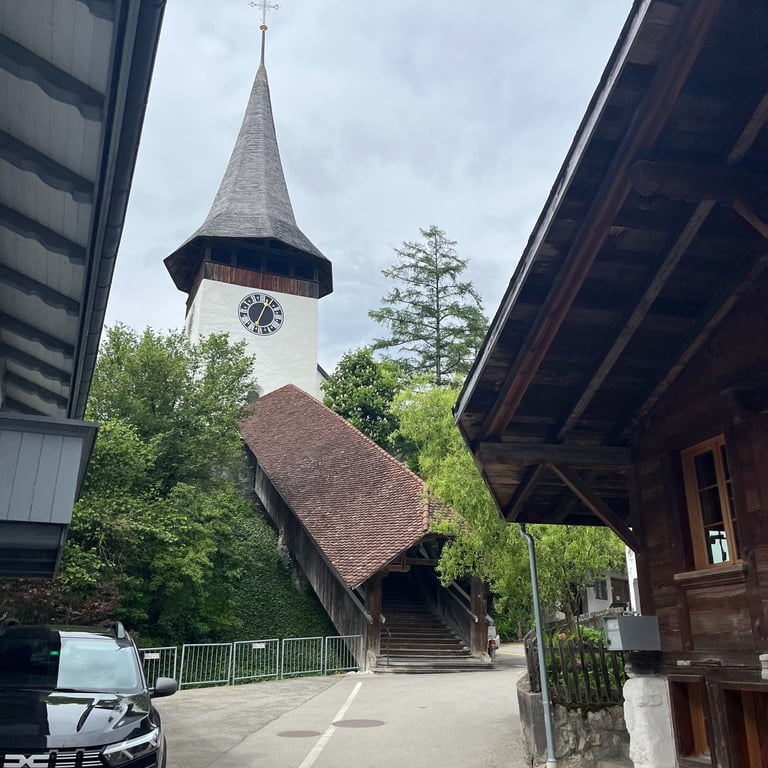
A large covered wooden staircase built in 1816 takes you over a small stream and up to Sankt Michaelskirche on top of a small hill. The oldest portions of the structure, which themselves stand atop even older foundations, date to the 11th or 12th Century. Like most churches in Switzerland, the building has undergone countless renovations and additions over the course of its 800 years in an effort to fit changing styles and needs.
Some of the buildings in Erlenbach im Simmental
Outside Sankt Michaelskirche in Erlenbach im Simmental
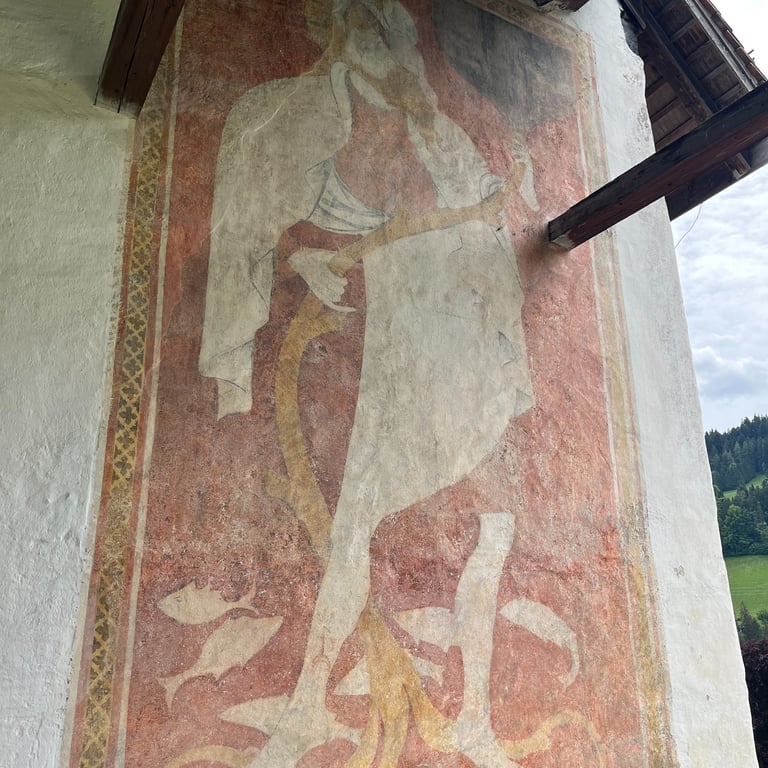
At the top of the stairs, you wrap around the building to the entrance underneath a small portico. A floor to ceiling fresco of (what I believe is) St. Michael adorns the exterior of the building foreshadowing what’s to come. Stepping inside, you are greeted by a magnificent barrel shaped ceiling (found in a few of the churches in the Simmental) and a true menagerie of early 15th Century frescos. The frescoes mostly tell stories from the bible and cover nearly every blank space including the plastered ceiling of the choir. On our latest visit, we wasted away nearly half an hour exploring and studying them.
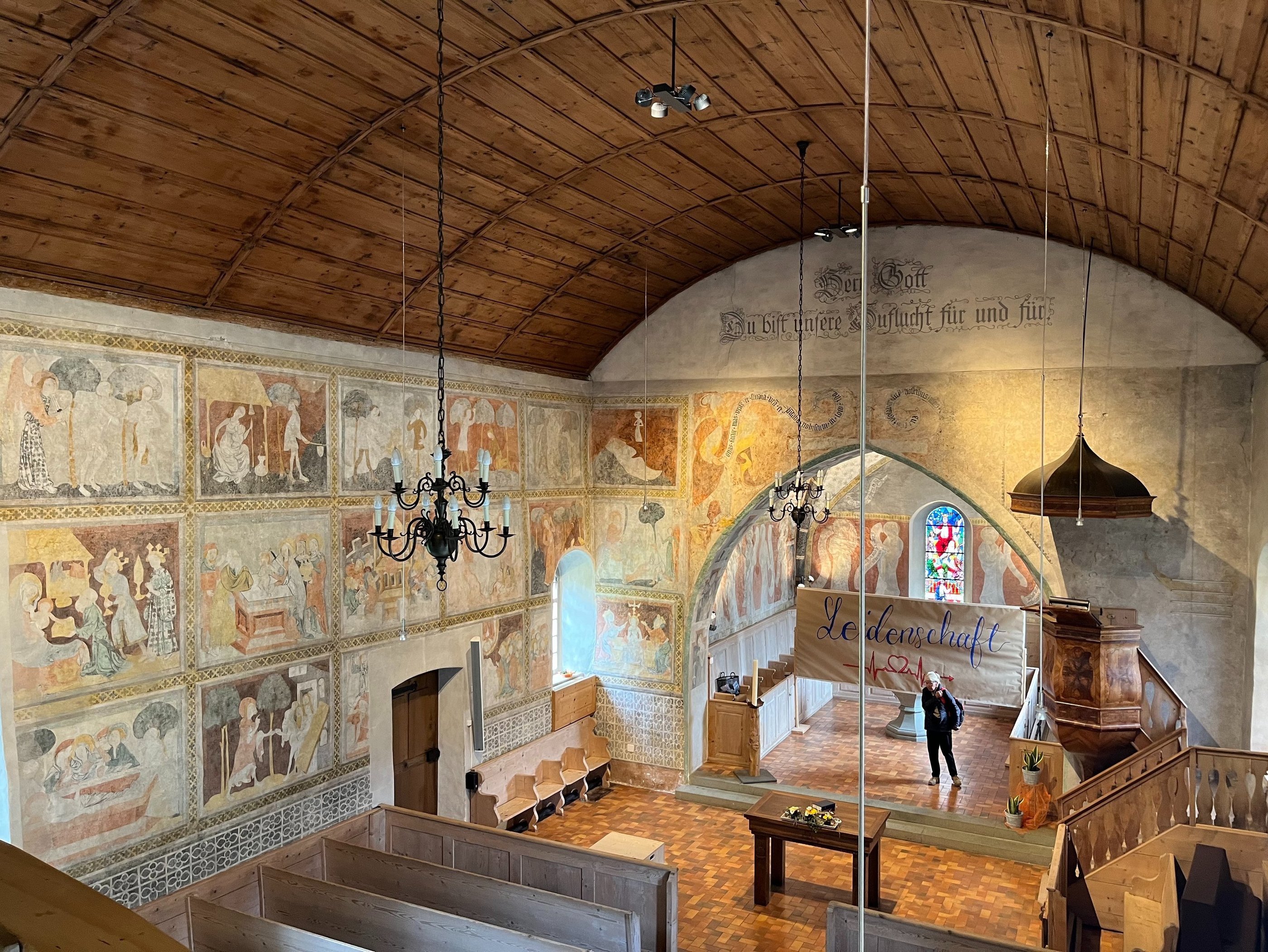
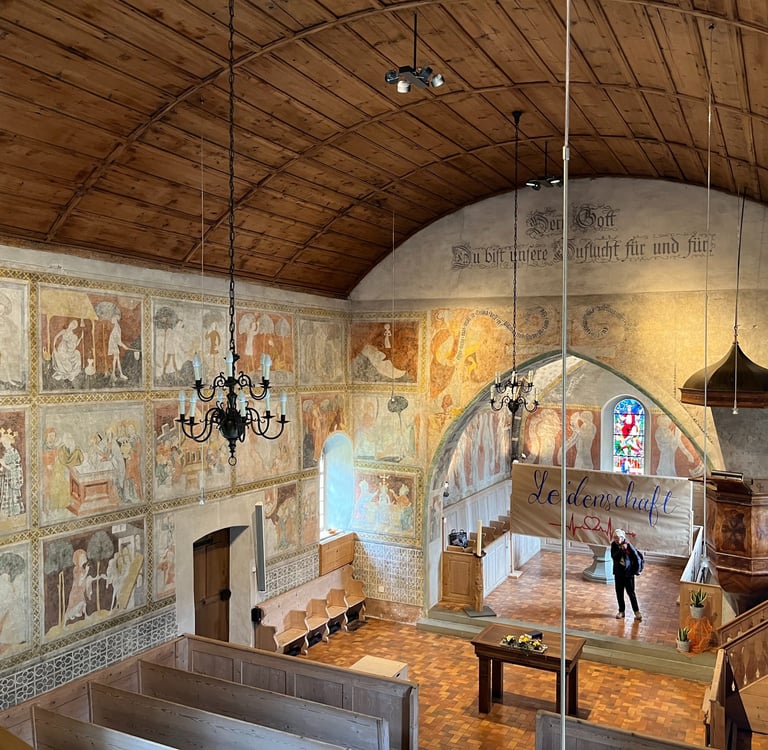
Interestingly, an unknown master painter potentially taking influence from the Alsace region of France and Germany, is responsible for nearly all the work. At some point however, it appears that, for whatever reason, that artist gave up or could no longer paint and a much less skilled painter moved in to fill the gaps.
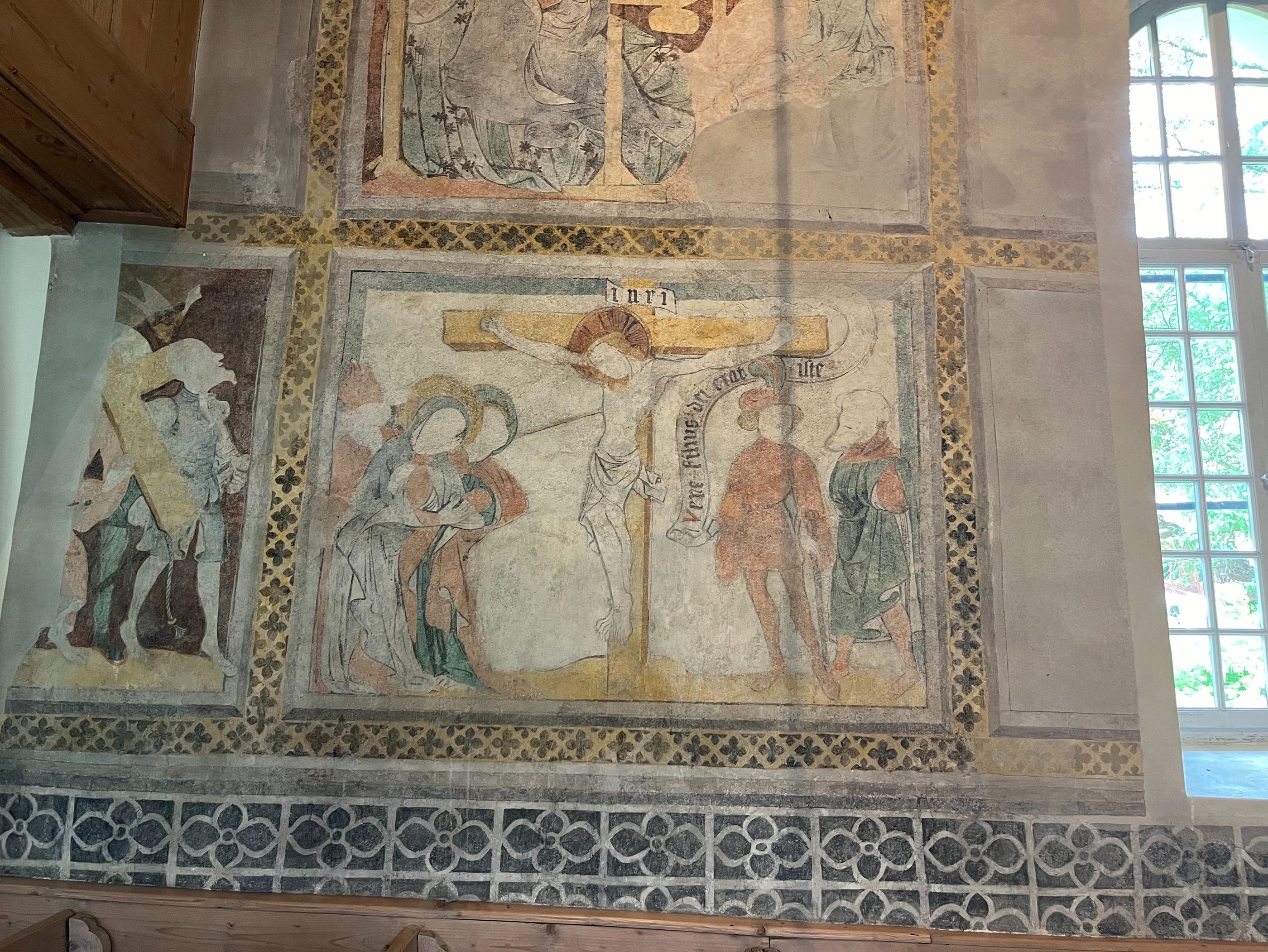
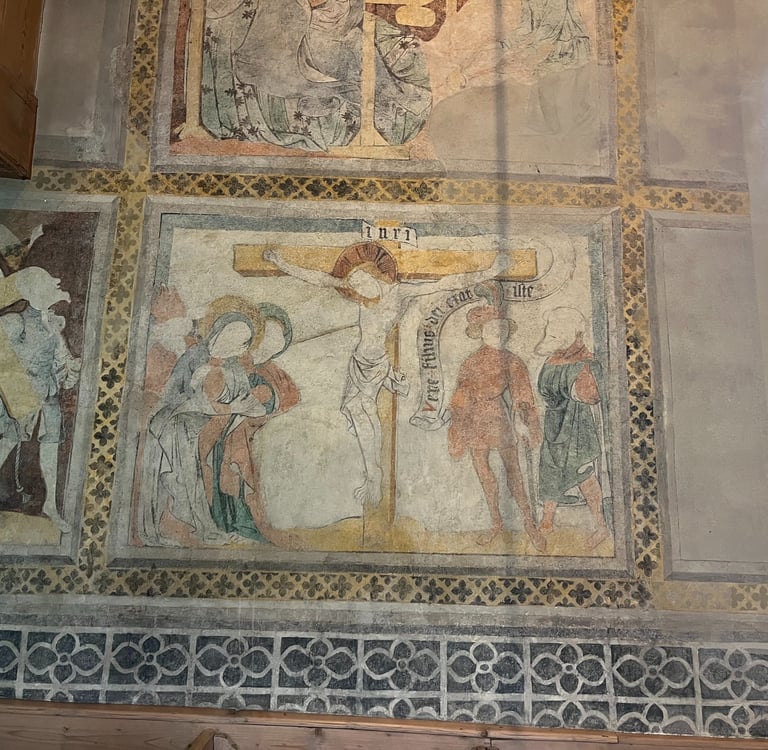
In an effort to make the scenes more relatable, many of them contain floppy-hatted, pointy-shoed Swiss observing, say the crucifixion or visiting baby Jesus in the manger. It’s excellent and I love it.
From the church, our walk heads back down the hill passing a few more impressive chalets on our way to the train station at Erlenbach. The Hausweg continues on from here both uphill (and up valley) back to Weissenburg on a parallel trail higher up on the hill, further down valley to Wimmis, or even up into the Diemtigtal offering plenty more walking and sights if you are in the mood for more local architecture.
Likewise, countless hikes start from here in Erlenbach and you can catch a train further into the Simmental. As with most of our walks, this is only a starting point. There is plenty more exploring to be done!
We hope you enjoyed our visit to the lower Simmental. If you enjoyed this week’s visit, check out the other articles in our Discovering Bern series, where we tour our home canton, or our series One Year: 26 Cantons where we visit all 26 of Switzerland’s Cantons in 2024. Stay tuned for additional articles on our Swiss travels every week!
Until next time, gute Reise, and feel free to leave a comment on one of our social media platforms!
Inside Sankt Michaelskirche in Erlenbach
Swiss onlookers at the crucifixion of Jesus