
Switzerland's Most Relaxing Lakefront Getaway: The Avant-garde Shores of Lago Maggiore
Look no further than Switzerland's Southernmost Canton of Ticino for the country's most relaxed vibes. Join us as we cross over the Alps by way of one of Switzerland's most scenic rail routes then bask in the sun along the shores of Lago Maggiore before taking in the views at one of Switzerland's biggest contributions to the world of counter culture.
LATESTONE YEAR: 26 CANTONS
Just a heads-up! We include affiliate links in some of our posts. If you click the link and decide to make a purchase, we may earn a small commission at absolutely no extra cost to you. It’s a way for us to keep providing you great guides to Switzerland's amazing off the beaten path destinations
Locarno and Ascona
A few months back we shared our history packed explorations of Bellinzona deep in Switzerland’s Italian speaking Canton of Ticino. This week we are back, soaking in laid-back vibes south of the Alps and exploring Ticino’s twin cities of Locarno and Ascona.
Just minutes from the Italian border, Locarno and Ascona sit on the large delta of the Maggia River where it spills into the northern end of Lago Maggiore (incidentally Italy’s second largest lake). Locarno takes up most of the eastern side of the delta while smaller Ascona occupies the western side.
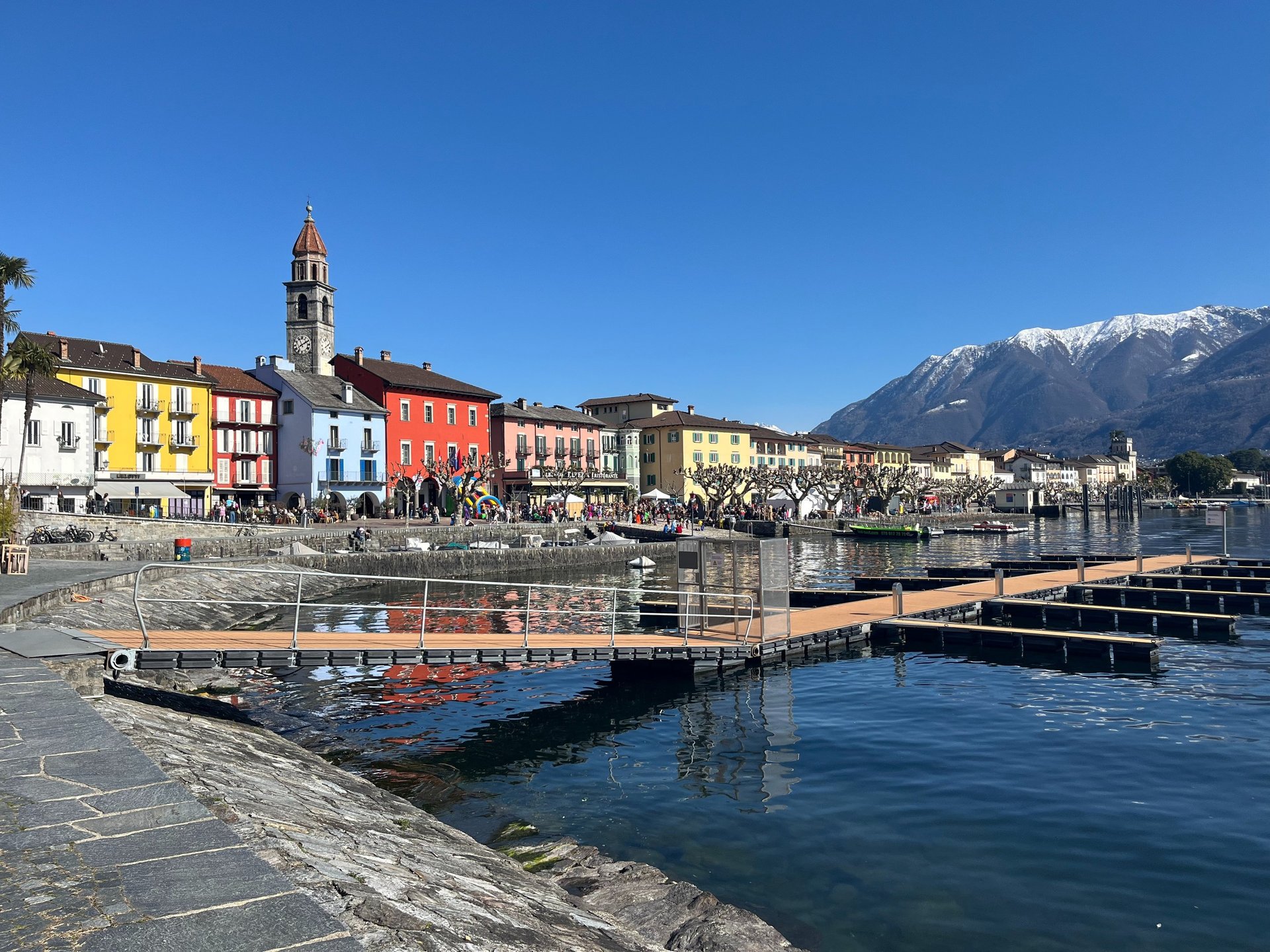
Locarno has an easy going, historic, and lively town center with a grand piazza that rivals any in Switzerland. Ascona’s small harbor and condensed old town look like something straight out of a Mediterranean holiday brochure. Together, the two towns make for one of the best holiday destinations in southern Switzerland.
We start off taking the scenic Panorama Train to Ticino by way of the Gotthard pass, explore the Piazza Grande and castle ruins of Locarno, then move on to the bay at Ascona. After exploring the Ascona old town, we head to the former island playground of the elite at Brissago then climb a heart pounding 500 plus stair steps to our destination, the quirky gardens at Monte Verità.
Thanks for joining us!
Over the Iconic Gothard
Today, most visitors to Ticino find their way south of the Alps by way of the Gotthard Base Tunnel. This modern marvel, the world’s longest train tunnel, enters the Alps outside of Altdorf in the Canton of Uri and pops out in Biasca just up the valley from Bellinzona in the Canton of Ticino about an hour later.
At its opening in 2016 the Gotthard base tunnel shaved nearly an hour off the trip from Zurich to Lugano, a boon for Ticino and its transalpine freight traffic. While the base tunnel unquestionably makes for the most efficient route between most of German speaking Switzerland and Ticino, once the novelty of having more than 2000 meters (6500 ft) of rock over your head wears off (quickly to instantaneously) the route becomes particularly dull with nothing in the way of scenery.
In combination with the Lötschberg and Simplon Tunnels, the Panorama Centovali Route between the Italian city of Domodossola and Swiss Locarno (covered by the Swiss Travel Pass) offers a far more visually enticing route from the Berner Oberland or French speaking Switzerland.
If you aren’t in the Berner Oberland or French Speaking Switzerland, though, you need not feel left behind. The Gotthard Base Tunnel’s predecessor, the historic Gotthard panorama strecke, offers a spectacular alternative.
Views of the Church at Wassen from the Gothard Panorama Train
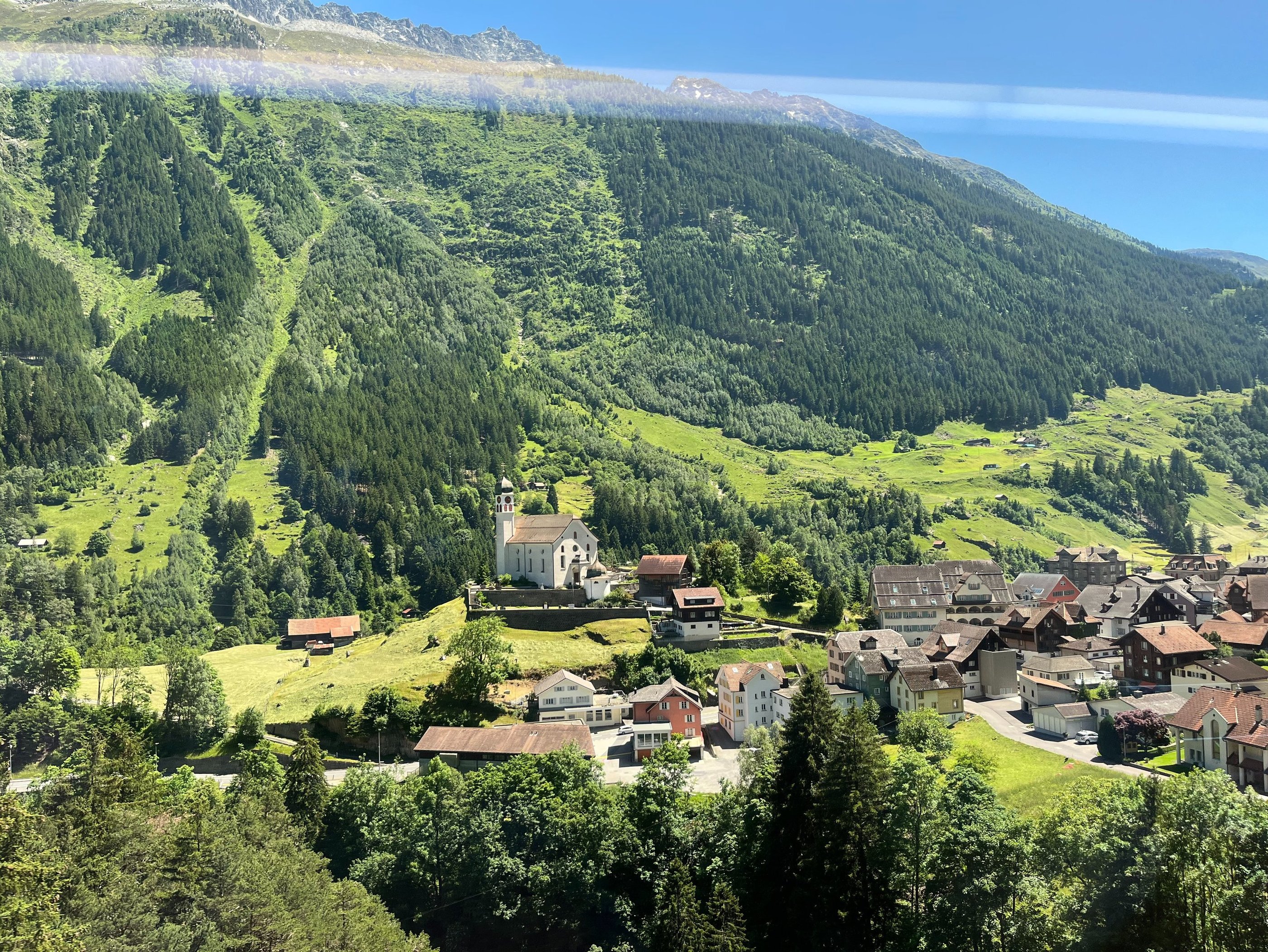
The Gotthard Panorama Express incorporates a boat ride from Luzern to Flüelen just outside Altdorf in the Canton of Uri while a number of intercity connections make their way past Lake Luzern via rail. Regardless of what you choose, the route past Altdorf is the same. The train climbs into the Alps looping around the church of Wassen three times offering increasingly impressive views before passing through the much shorter Gotthard Crest Tunnel into the high Alps around Airolo.
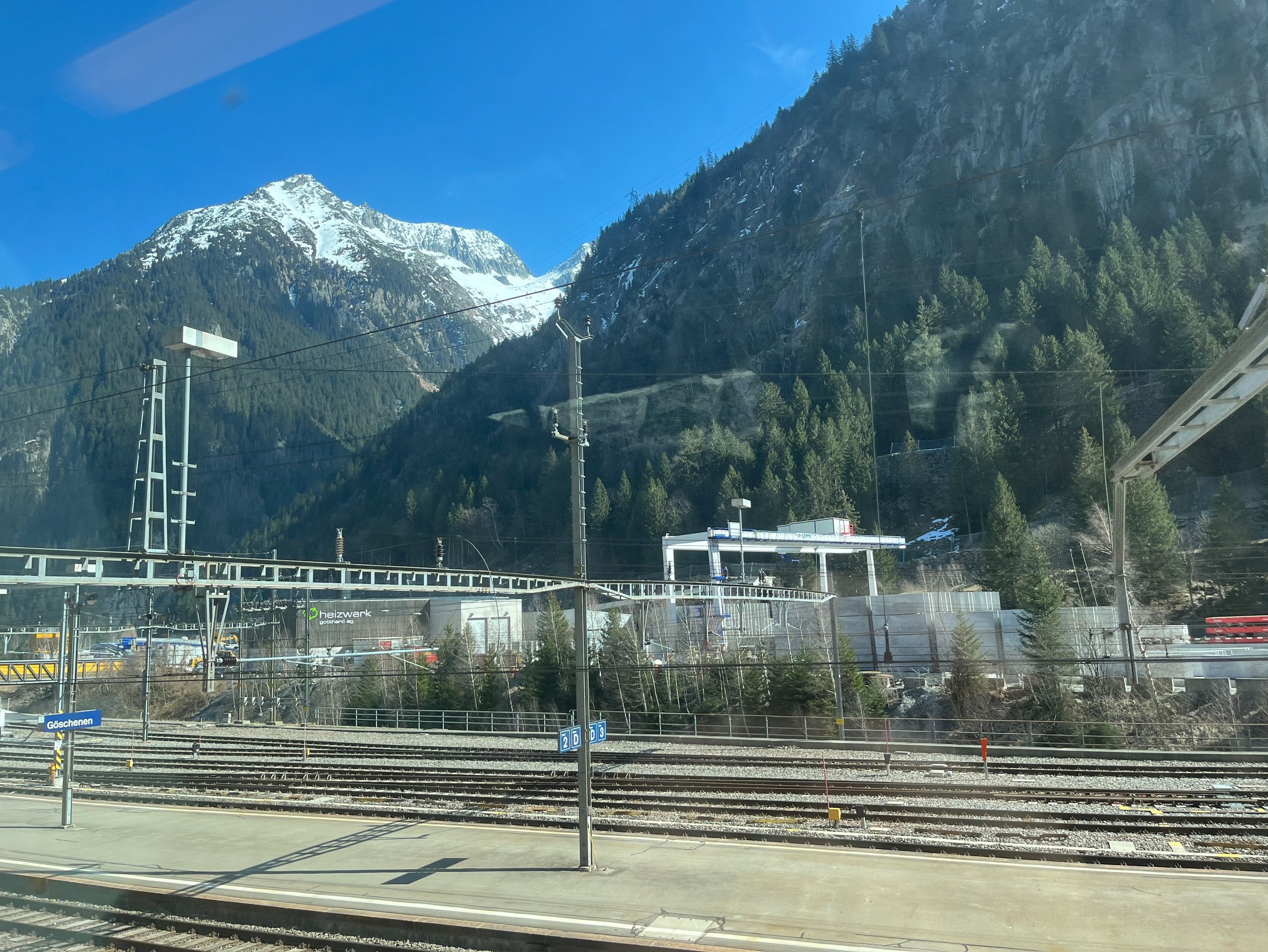
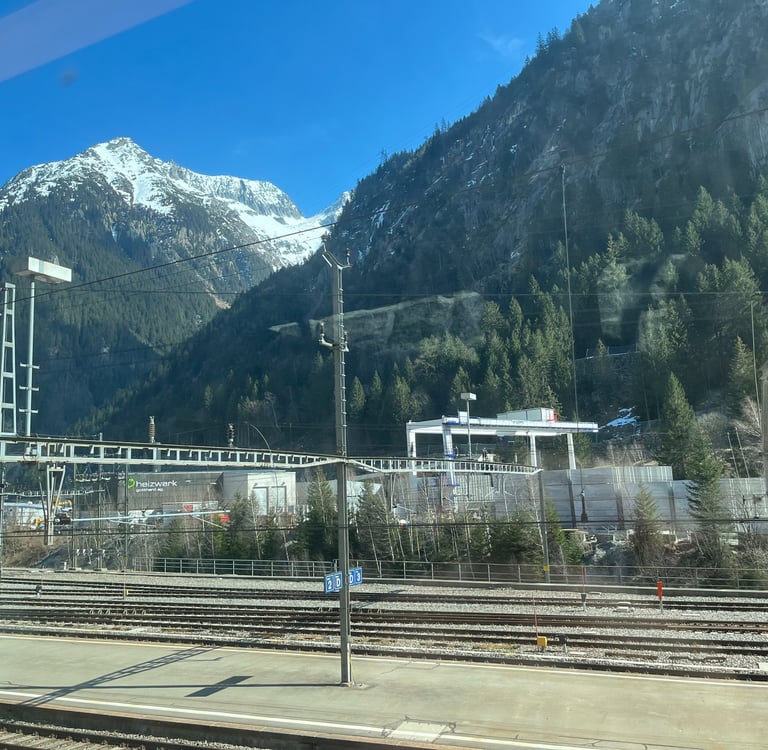
Heading into the alps at Göschenen
From Airolo, it’s a steady downhill through the incredible Ticino River Gorge, weaving in and out with the Gothard road route until the line links back up with the base tunnel tracks up valley of Bellinzona. From there it’s on to the fantastic Castles at Bellinzona and finally the shores of Lago Maggiore and the train’s final destination, Locarno.
Locarno's Piazza Grande
Wandering off the train in Locarno, you are immediately drawn into its old town center and the magnificent Piazza Grande with its cobbled square and colorful 16th Century buildings.
Wandering the streets of Locarno
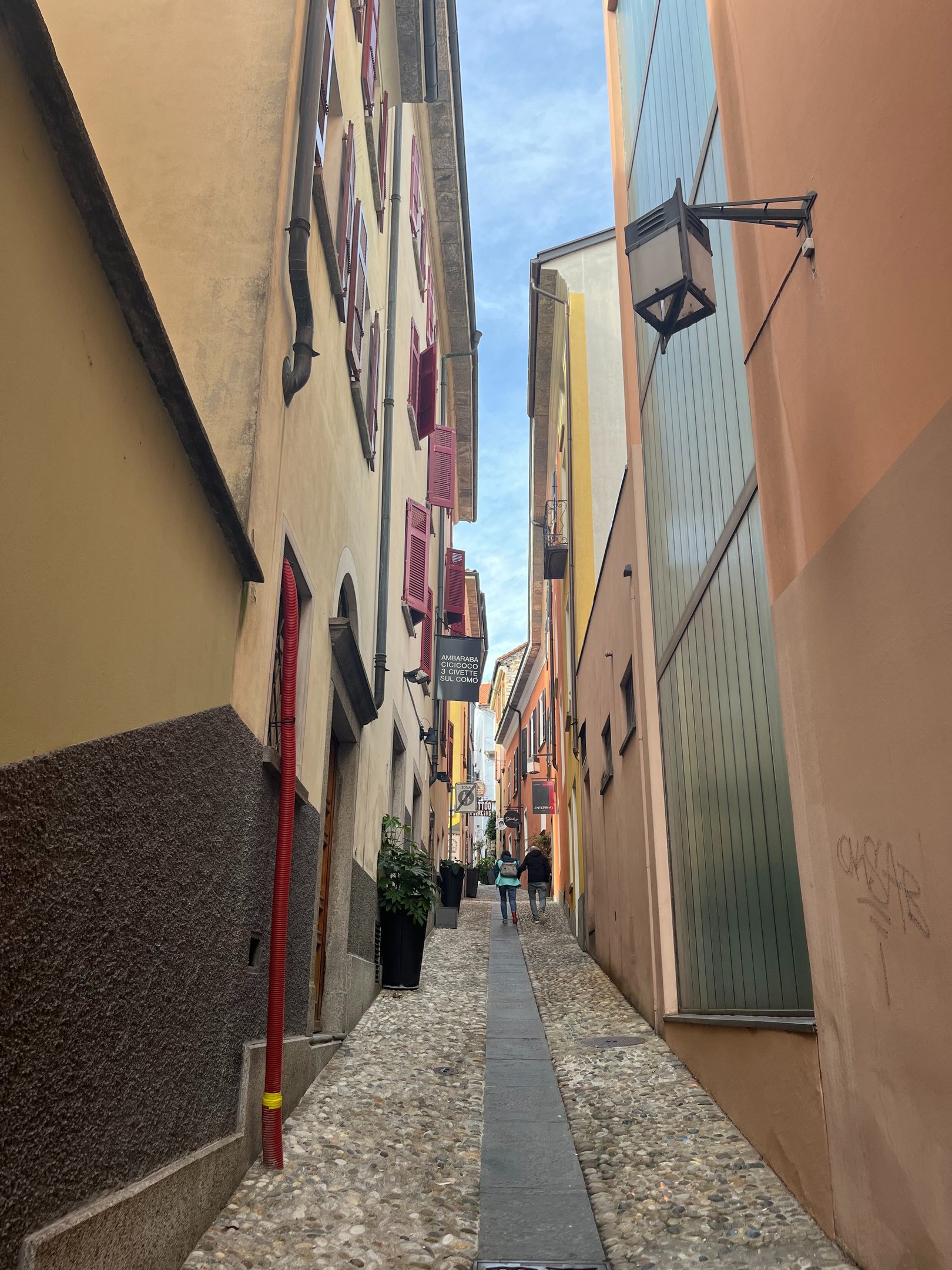
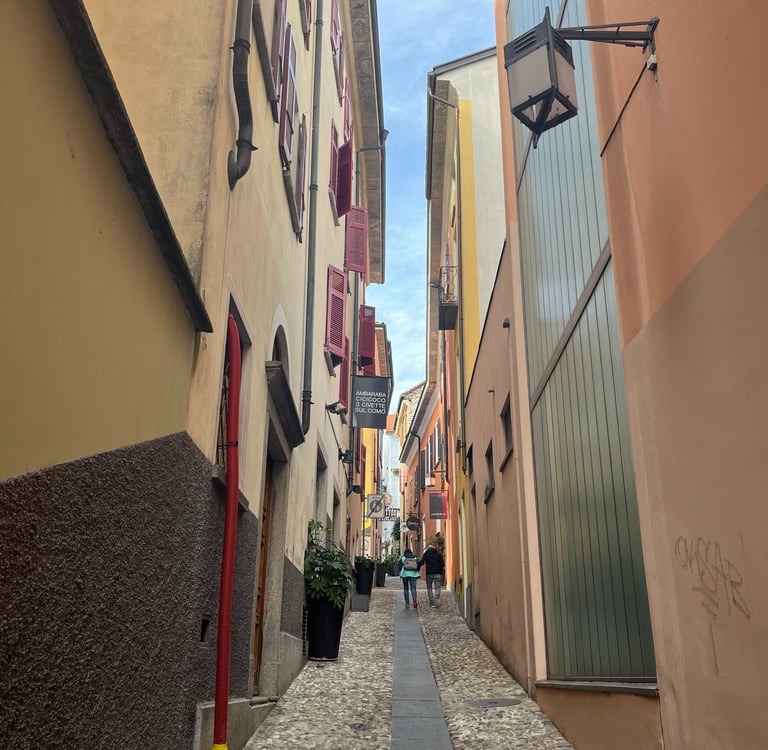
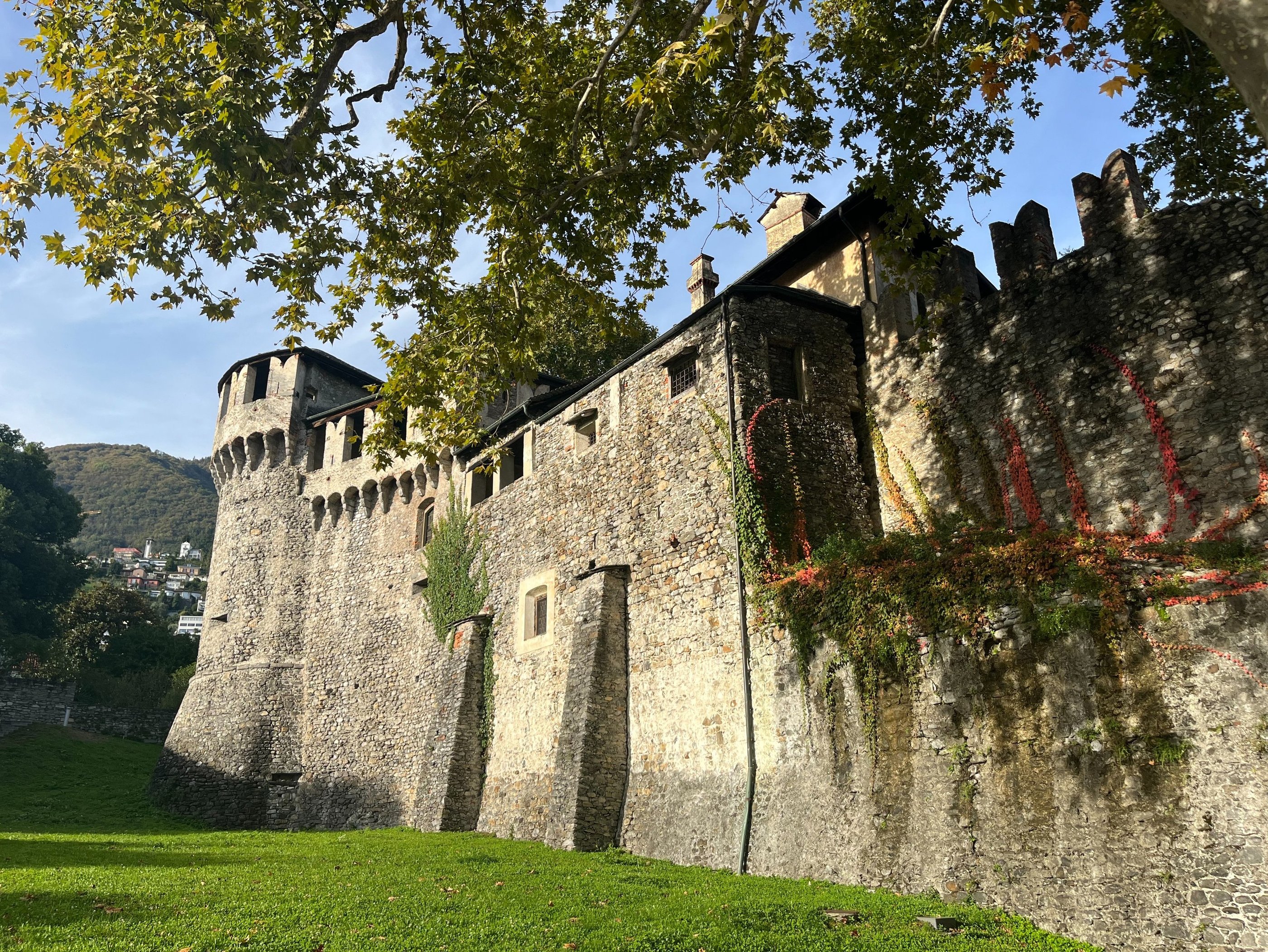
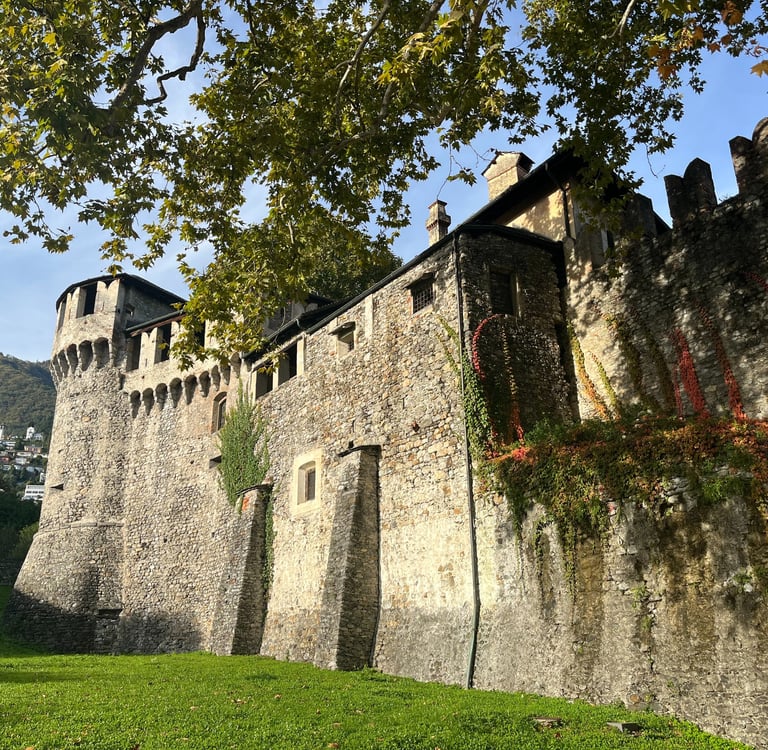
In 1342, the influential Visconti family from Milan seized and fortified Locarno lending their name to the 12th century castle. In the 15th Century, the castle passed into the hands of the Rusca family from Como and, finally, in early 16th Century, much of the castle was demolished by the invading Swiss Confederates. The remains of the castle’s central core eventually became government buildings. Construction of the modern road in the 20th Century revealed a series of foundations which can now be viewed under a road bridge just to the west of the old town.
While the waterfront to the south of the Locarno old town is nice, it’s rather modern as far as these things are concerned. Once satisfied with our explorations of the old town, we prefer to hop on a bus straight to Ascona.
Visconteo Castle in Locarno
The hub of life in Locarno, the Piazza Grande is regularly buzzing with activity and the restaurants surrounding the square are a people watchers dream. Sipping an Aperol on the piazza, you would be forgiven for thinking you had been transported into the heart of Italy but worry not, the bill should bring you straight back to reality. Despite its aesthetics, Locarno is still very much Swiss and has the price tags to prove it.
Piazza Grande dates to the beginning of the Swiss occupation of Locarno in the 1500's but, for much longer than that, the town has served as an important regional hub. In 1164, the Holy Roman Emperor granted Locarno market rights solidifying it as a center for trade, politics, and social life in the region. Even today, the piazza serves as one of the primary venues for the prestigious Locarno Film Festival among other concerts and events.
Defending this central position was no easy task. At the far end of the Piazza Grande stands the remaining ruins of the 12th Century Visconteo Castle. While Visconteo doesn’t really live up to the nearby UNSECO World Heritage Castles at Bellinzona, its interesting looking towers are still, arguably, worth a brief exploration.
Avant-garde Ascona
A bus stop just above the Viconteo castle ruins offers an expedited connection straight to the edge of Ascona’s pedestrian old town.
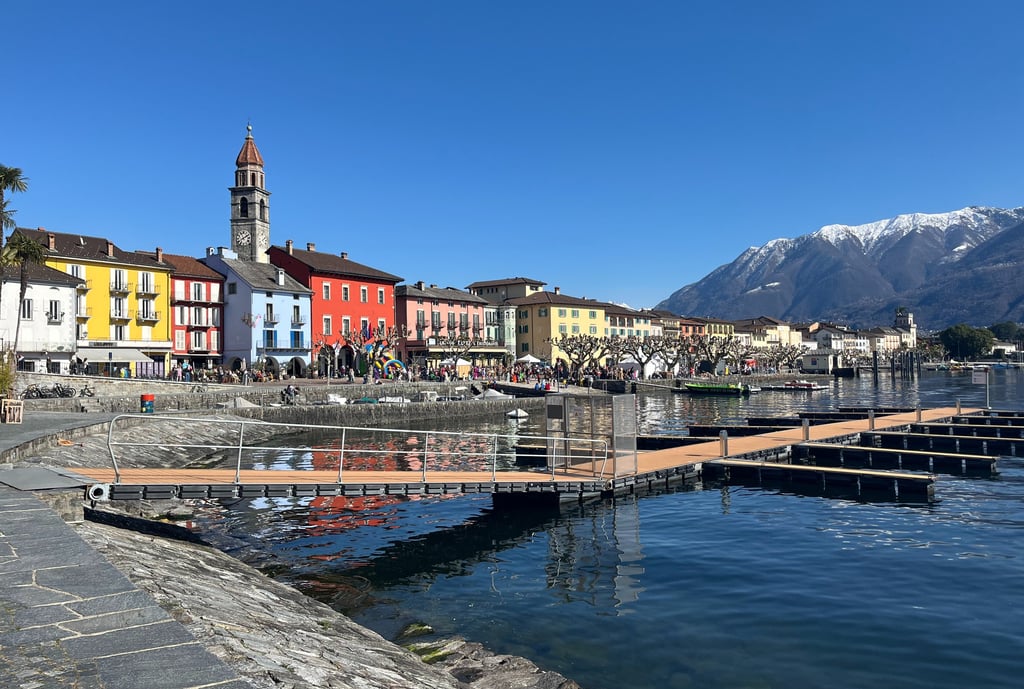
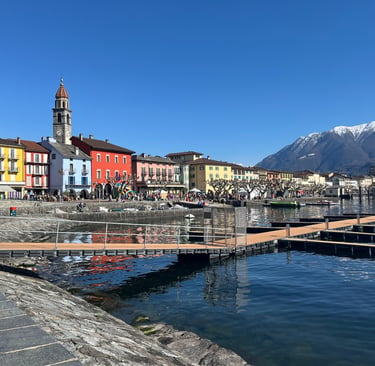
Ascona’s charming town center with its narrow cobblestone streets, pastel-colored houses, and elegant piazzas would easily stand its own against most towns in Switzerland but is easily overshadowed by its even more inviting waterfront promenade. Lined with cafés and boutiques, the waterfront’s relaxed but upscale vibe belies its working-class roots. Ascona was once a relatively sleepy fishing village before an explosion of tourism in 20th Century (more on that in a bit).
The old town of Ascona
The small port in Ascona, no longer serves many fishermen but it does compete with Locarno’s Piazza Grande for the best aperitif locale in all of Switzerland. On our latest trip, Ascona was celebrating carnival with, seemingly, the entire town out enjoying the waterfront and the atmosphere was simply lovely.
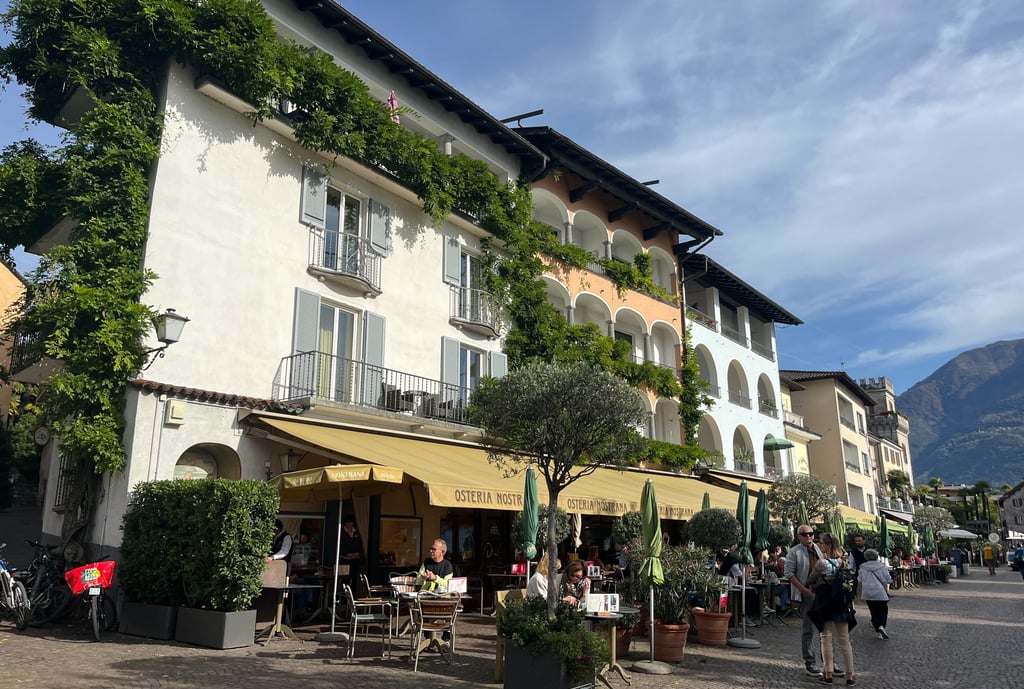
The port of Ascona
Ascona’s longer history largely parallels that of neighboring Locarno but, more recently in the 20th Century, it has become known for pop culture and alternative lifestyles. That reputation owes to two locations just beyond the old town of Ascona, the Isle Brissago with its two small islands in Lake Maggiore and Monte Verità, the hill above Ascona. Today, both locations are owned by the Canton of Ticino and open to the public.
We start off catching a short ferry ride to Brissago.
A Slice of the World's Flora in Switzerland
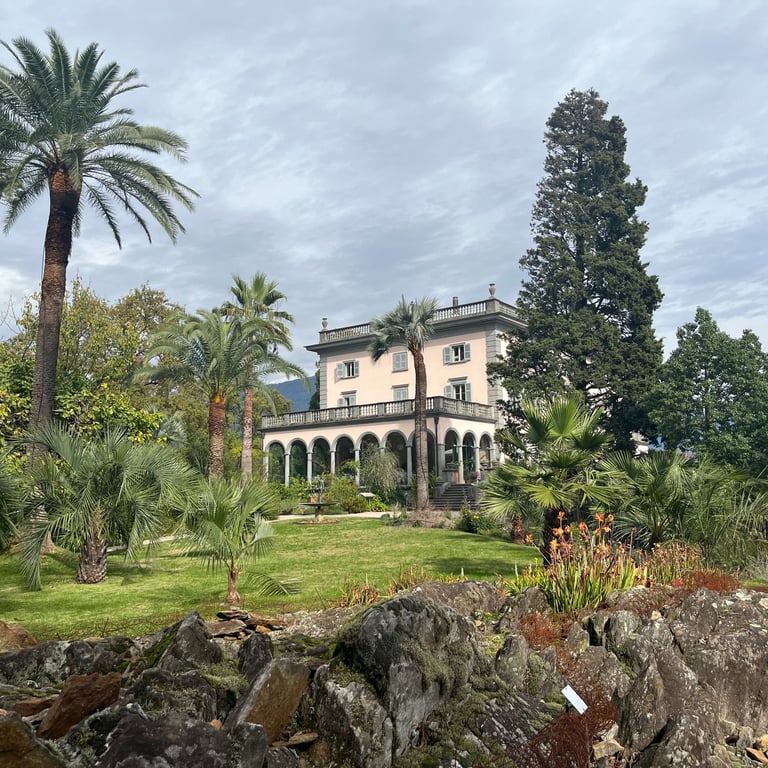
The two Brissago Islands, San Pancrazio (also known as Isola Grande) and Isolino (Isola Piccola), have a fascinating and far-reaching history from the noble families of Europe to botanical conservation and art preservation.
There is evidence that humans have been making their way to these rocky islands since at least Roman times, but the first permanent occupation seems to date to the Middle Ages when a small monastery was established on the islands. This aligns well with the founding of dozens of similar remote religious enclaves all across Switzerland, which remain in quite high density here in Ticino.
In the late 19th century, the islands gained exceptional prominence under the ownership of the Baroness Antoinette Saint-Léger, a Russian noblewoman. Over several years, the Baroness transformed Isola Grande into a lush botanical garden, importing exotic plants from around the world and creating a paradise of subtropical vegetation. The islands became a retreat for intellectuals, writers, and artists, hosting some of the periods most renowned figures including writers James Joyce and Herman Hesse.
The Brisaggo Islands outside of Ascona
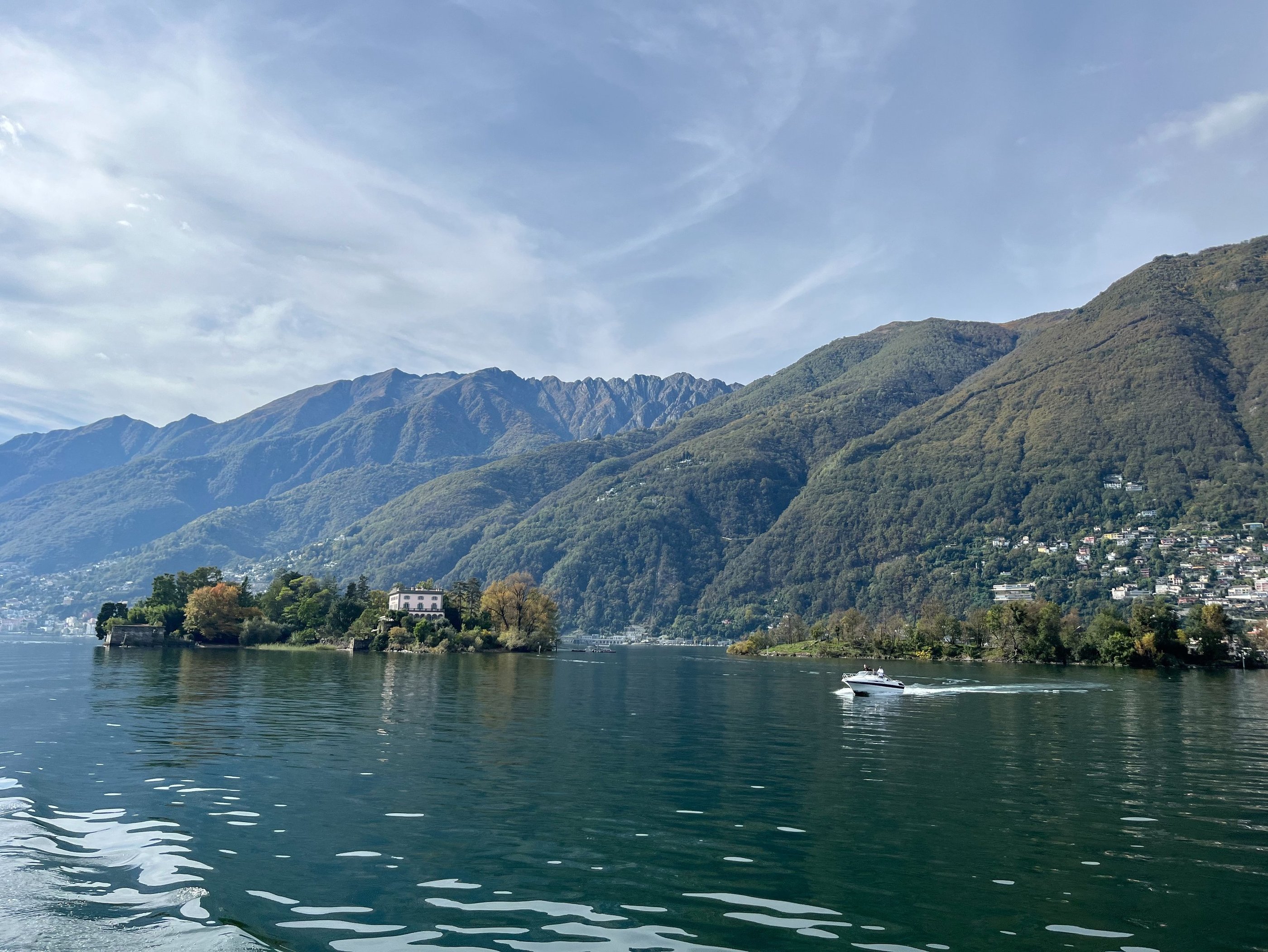
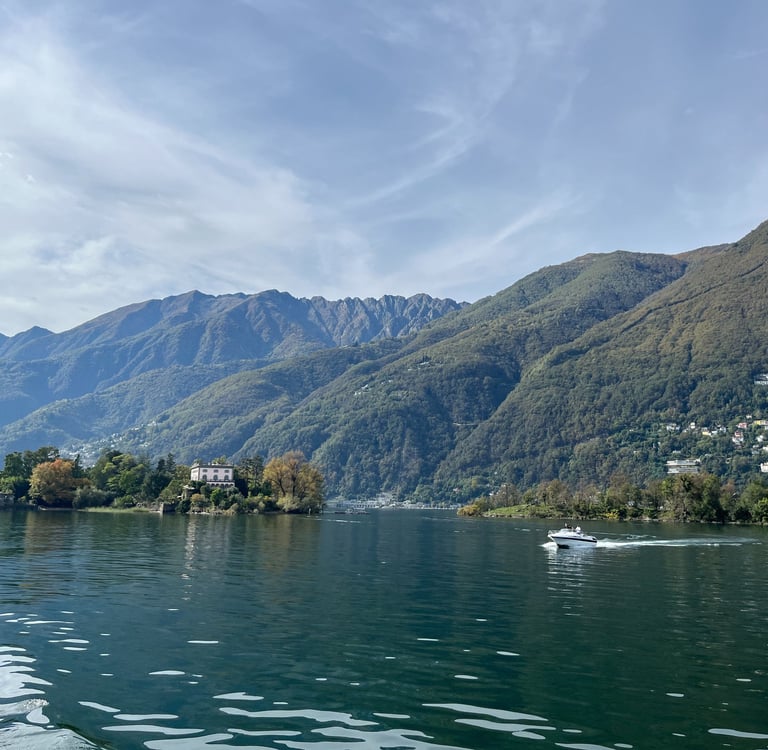
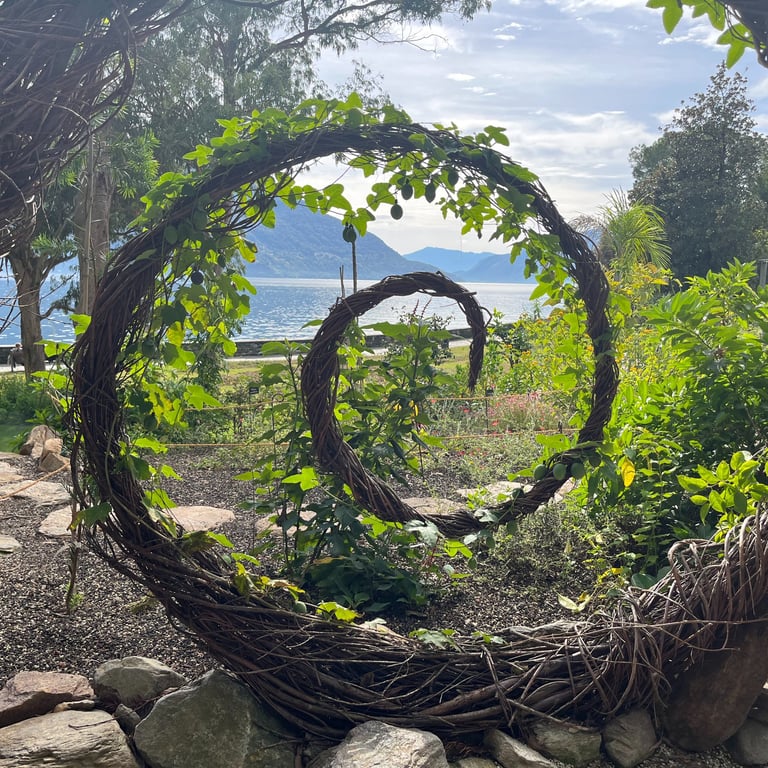
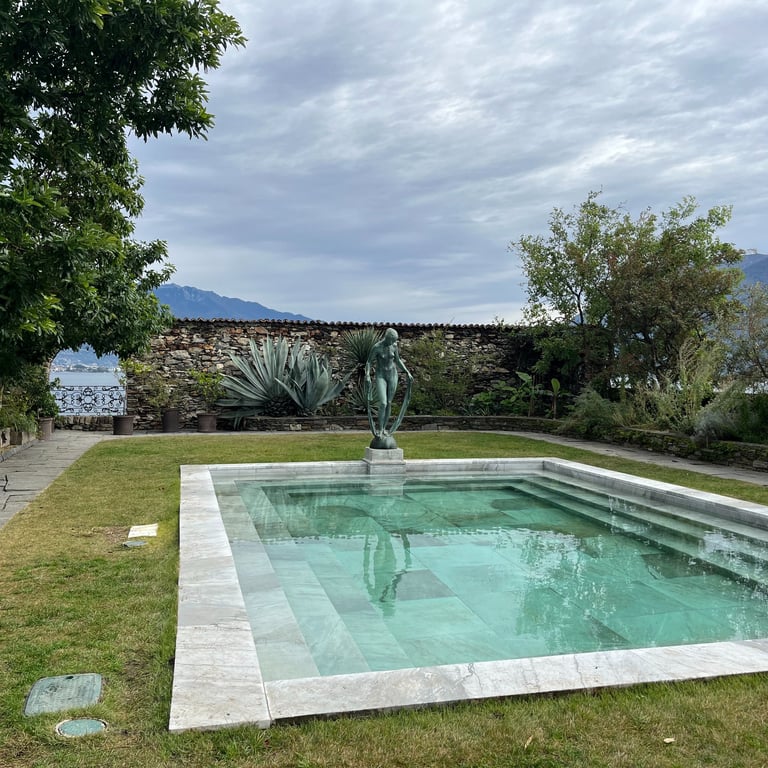
Eventually financial difficulties forced the Baroness to sell the islands. After passing through several hands, the Canton of Ticino alongside the Swiss Confederation, and the cantons of Zurich, Basel, and Schaffhausen jointly acquired the islands in 1949. Since then, the Brissago Islands have been maintained as a fantastic botanical park with over 1,700 plant species.
Isola Grande, with its lovely collection of gardens and small hotel and restaurant, is open to the public every summer. While the island isn’t terribly large, in combination with a short boat ride from Ascona or a slightly longer trip from Locarno, a visit is well worth the effort. The full trip gives you the opportunity to explore every nook and cranny of the island and still get back to the mainland in time for your afternoon Apéro.
Views from the Brissago Islands
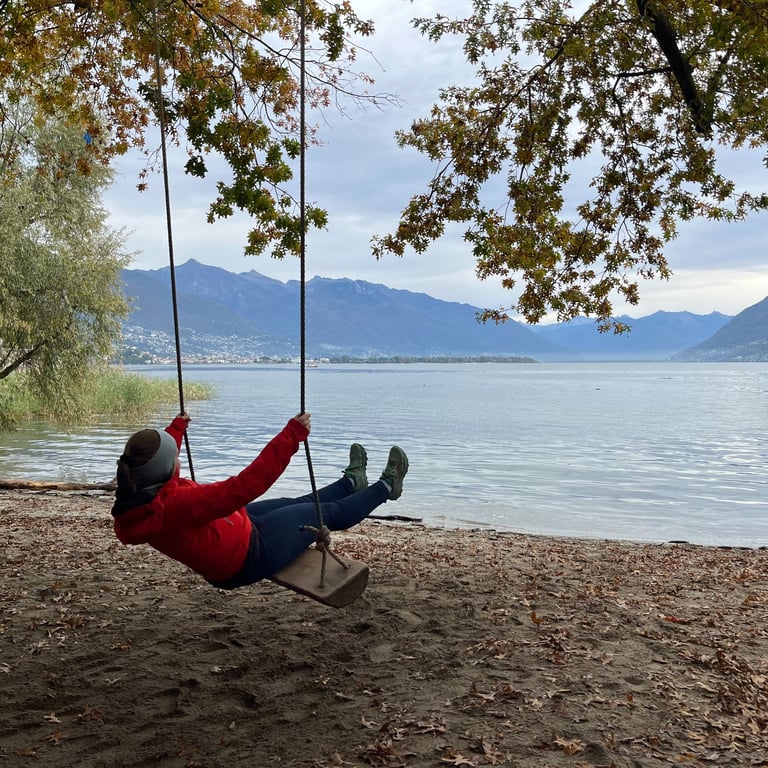
Before there was Woodstock
Back in Ascona, we make our way through the old town to a staircase heading up the hill to increasingly gorgeous views over the town and the lake. After about 500 stone steps, you reach the complex of Monte Verità, or the ‘Mountain of Truth.’
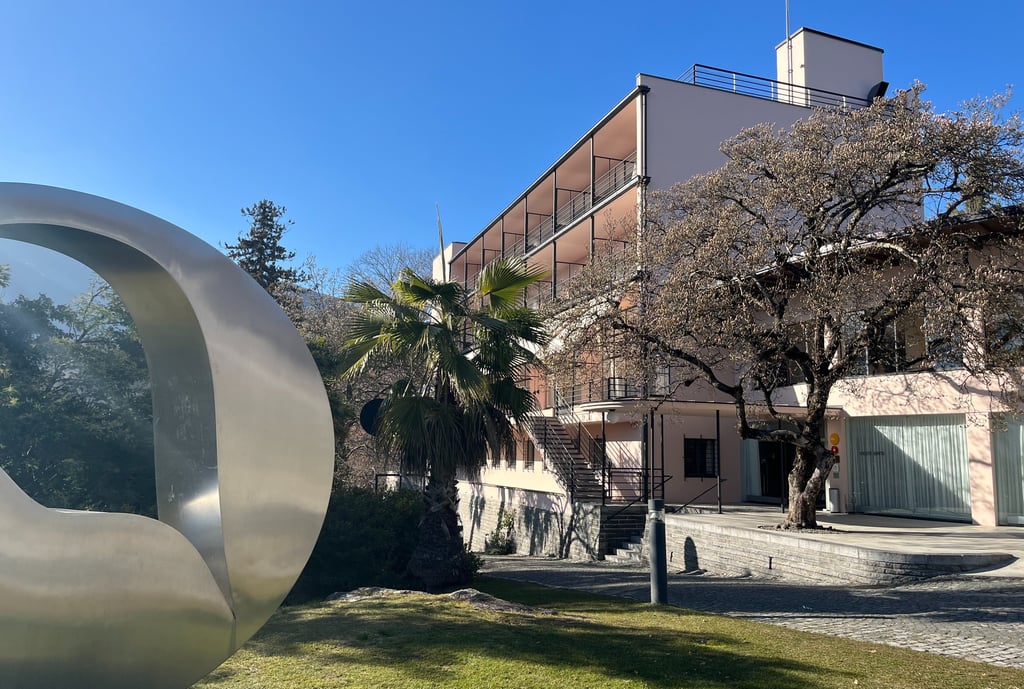
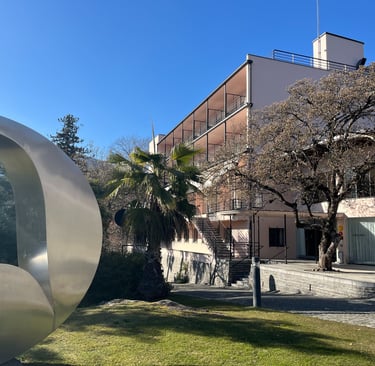
The hotel at Monte Verità
Long thought to be a site of powerful energy, Monte Verità attracted a wide range of characters over the years but perhaps the most renowned were idealists Henri Oedenkoven and Ida Hofmann. In 1990, wealthy and well to do Oedenkoven and Hoffman established a commune at Monte Verità focused on freedom of mind and body and breaking away from social norms. At the height of the rigid Victorian Era, the commune at Monte Verità embraced veganism, nudism, natural living, and self-sufficiency. The OG hippies.
Needless to say, in an era where the sight of a woman’s bare ankle was enough to brand her a sinner, Monte Verità’s nude tantric dancing and free love (by Germans no less!) was not well received in highly religious Ascona.
Despite local shaming, the vision of Monte Verità was pervasive, attracting intellectuals, artists, and free thinkers from all across Europe, effectively launching the region onto the world stage. Philosophers like Carl Jung, writers like Hermann Hesse, and artists like Paul Klee and Rudolf von Laban flocked to Monte Verità and the hill became a center for avant-garde dance and early modernist artistic movements.
By the 1920s, the commune had dissolved but the site and its sanatorium remained a cultural center. In the 1930s, Monte Verità was sold to Baron Eduard von der Heydt, banker to the German Kaiser whose art collection continued to foster Monte Verità’s reputation as an intellectual retreat. With some potentially questionable activities occurring amongst the hill’s German elite towards the end of World War II, the Baron agreed that, after his death, Monte Verità should pass to the Canton of Ticino.
While there aren’t bands of naked free thinkers wandering around the grounds today, Monte Verità remains an important cultural venue. Its hotel hosts conferences, exhibitions, and events dedicated to philosophy, art, and ecology and a small museum shows off the legacy of the site. Public gardens likewise offer a number of (a bit wacky) outdoor art exhibits, a café, a tearoom, and some exceptional views over Ascona and Lago Maggiore, the perfect way to cap off a visit to this wonderful and relaxed corner of Switzerland.
We hope you enjoyed our visit to Locarno and Ascona. If you enjoyed this week’s visit, check out the articles in our series One Year: 26 Cantons, were we explore the lesser known of Switzerland. Stay tuned for additional articles on our Swiss travels every other week and, until next time, gute Reise! Feel free to leave a comment on one of our social media platforms or write us using our contact form.

